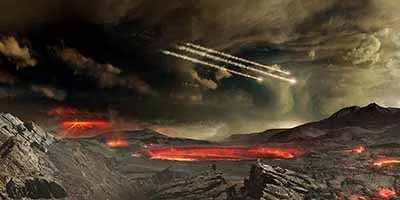
The story of the first 3.5 billion years of life on Earth. From chemical evolution through prokaryotes and photosynthesis to the first multicellular life forms.

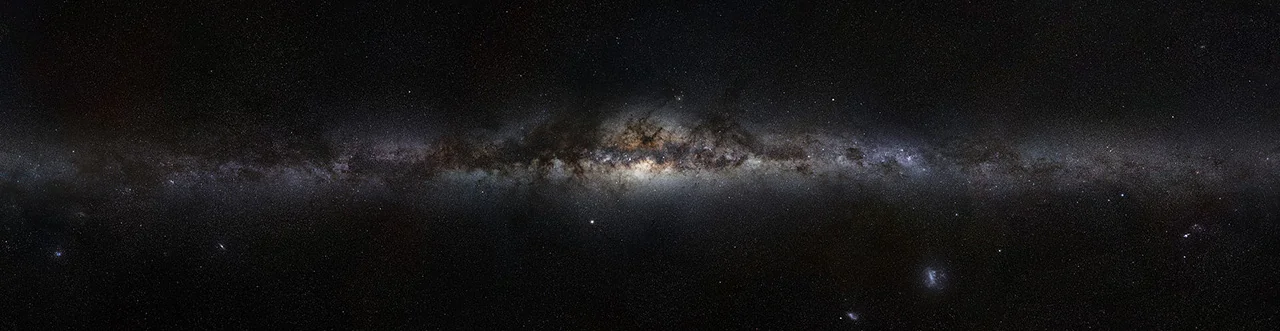 The part of the Milky Way visible from Earth. (Image Credit: ESO/S. Brunier)
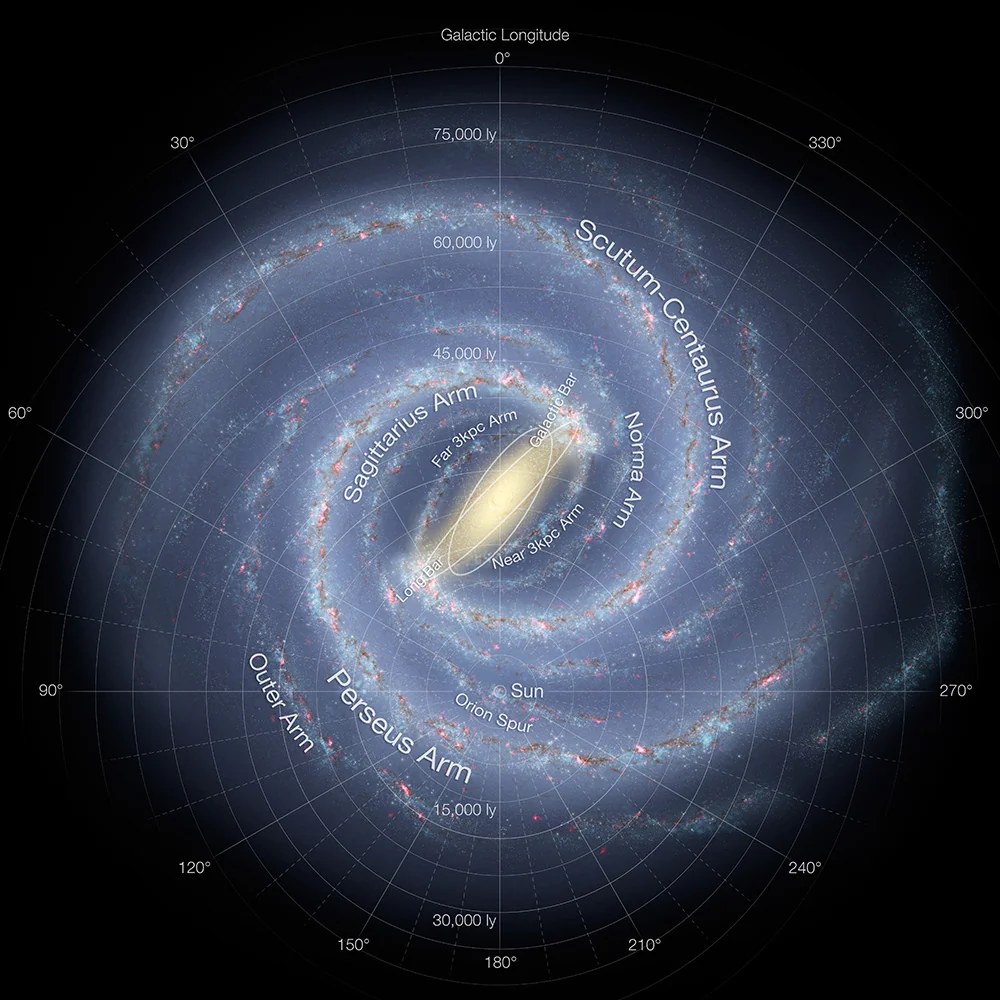 An artist's impression of the Milky Way. (Source: NASA/JPL-Caltech/ESO/R. Hurt; via Wikimedia Commons)
 Dr. Frank Drake (Image Credit: Raphael Perrino; via Wikipedia; CC-BY 2.0)
Under good conditions, you can see 6000 stars in the night sky with the naked eye. This is our immediate cosmic neighborhood and only a vanishingly small part of the Milky Way. The far larger part appears from Earth only as a bright band across the night sky, its stars too distant to be told apart. But even this is only a small part of a galaxy with so many stars that we cannot even say exactly how many there are. Estimates range from 100 to 400 billion. Most of them will remain hidden from us forever behind dust clouds and countless other stars.
If there are so many stars and life could arise on Earth, why not elsewhere in the Milky Way? How many other civilizations could exist? It is a question that also interested the American astrophysicist Frank Drake. In 1961 he presented an equation for estimating the number of intelligent, technological civilizations in the Milky Way.
This equation, named after him, reads:
\begin{equation} \Large \nonumber N = R_* \cdot f_p \cdot n_e \cdot f_l \cdot f_i \cdot f_c \cdot L \end{equation}Where:
Currently, we only have a relatively good idea of the magnitude of the first two parameters of the equation (\(R_*\) and \(f_p\)). The other values are not even roughly known. Given this uncertainty, it makes little sense to ask for the result of the Drake equation at all. The result is whatever you want it to be. You want a galaxy with many civilizations (N > 100,000) like in Gene Roddenberry's Star Trek? No problem, there are suitable parameters for it. You want to be alone in the Milky Way, maybe even in the universe (N<<1)? No problem, there is a parameter set for that, too. According to our present knowledge, no parameter set is better or worse than any other.
The desire for numbers is understandable, and no one wants to read an article about the Drake equation that does not present a result. So I, too, will present two estimates for the result of the equation at the end of this article. The real value of the equation, however, does not lie in calculating a number. It is a roadmap to insight: for the first time, it showed which fields need to be studied in order to answer the question of extraterrestrial life. In the 60+ years since its formulation, countless research papers have been published dealing with the equation and estimates for its parameters. It was on the minds of the astronomers who discovered the first exoplanets 30 years ago. No equation has stirred the imagination and discussion on the subject of the search for extraterrestrial life more than the Drake equation. When NASA searches for microfossils on the Red Planet today with the Mars rover Perseverance, it is, at its core, always also about determining the parameters of the Drake equation more precisely.
How many stars are born each year whose planetary systems could harbor life? To answer this, we need to know what a star must offer to make life possible. The problem is that Earth is the only planet we know of on which intelligent life has arisen. So let's begin with an excursion into Earth's history.
 Stromatolites are among the oldest traces of life on Earth. They are layered limestone rocks built up by mats of microorganisms. (Image: Gabriele Delhey; CC BY-SA 3.0)
An important factor in assessing the suitability of a star for the emergence of intelligent life is its lifetime. The star must be able to maintain a stable habitable zone for long enough to allow the initial development of life and its evolution into intelligent life.
Earth is 4.54 billion years old. Different studies date the beginning of life, based on microfossils or their remains, to 3.5 - 4.1 billion years ago [2]. On a geological time scale, life on Earth originated early, just 300 million years after the first solid crust had formed. At least on Earth, it appears that simple life arose as soon as the right environmental conditions were present. These include a solid crust and the presence of liquid water.
The first life forms were simple single-celled organisms without a nucleus, called prokaryotes. Bacteria and archaea belong to this group. The latter, formerly also called primordial bacteria, are adapted to habitats with extreme conditions. They are still found today in geysers and in the vents of the so-called "black smokers" in the deep sea. Some species can survive without oxygen and use molecular hydrogen for their metabolism instead.
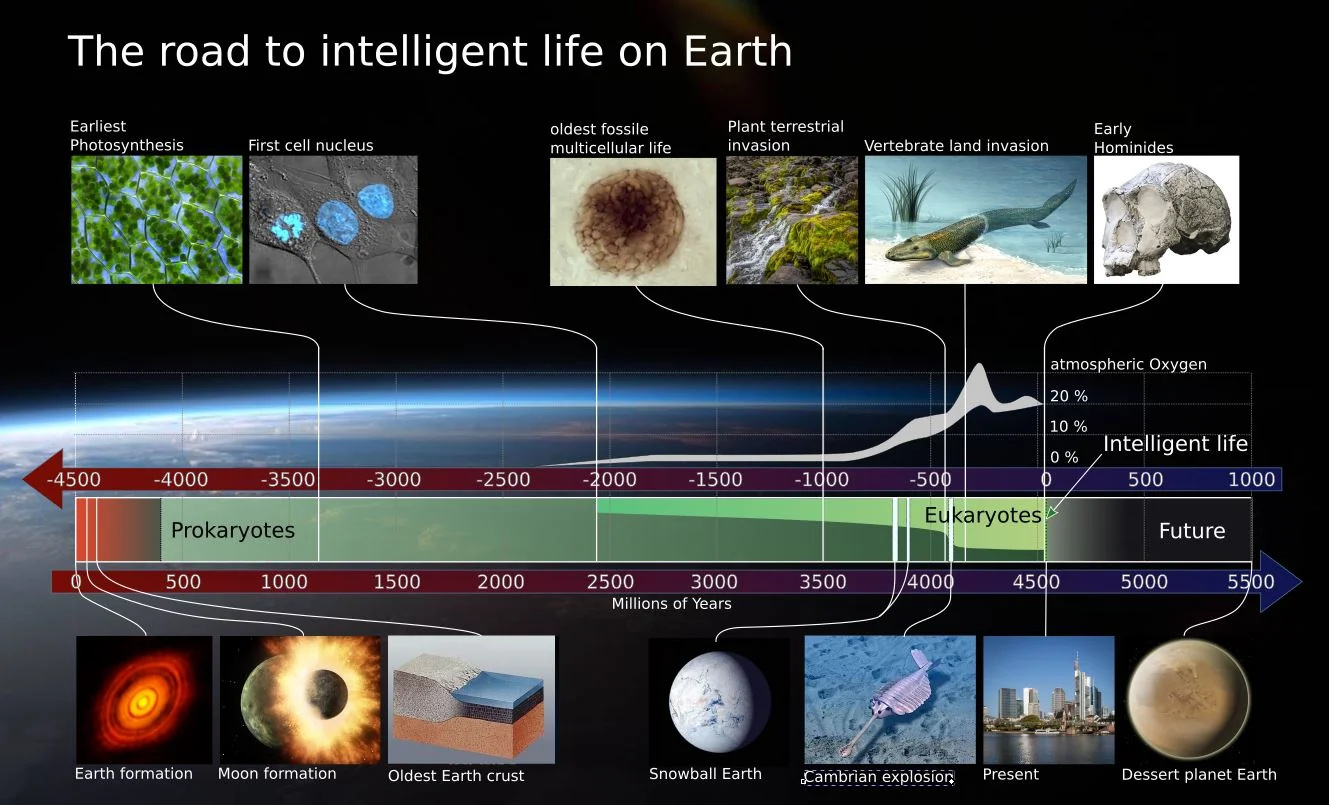 Milestones in the evolution of life on Earth.
Life on Earth may have arisen quickly, but it remained single-celled for more than 2 billion years. That is an amazingly long period of time. Then, about 1.6 to 2.1 billion years ago, eukaryotes emerged: initially simple single-celled organisms with more complex cell structures. With a diameter of 10 to 30 micrometers, the cells are much larger than those of the prokaryotes. They are subdivided into organelles, which perform various functions similar to the organs of the human body. A nucleus contains most of the genetic material in the form of DNA.
The evolution from unicellular to multicellular organisms took place independently at least 25 times in the group of eukaryotes. All known plants, animals and fungi on Earth belong to the group of eukaryotes. From their appearance to the emergence of intelligent life, it took another 2 billion years. Altogether, evolution needed more than 4 billion years until highly developed life forms could complete the final step toward intelligence.
Evolution toward intelligent life is a multistage process that probably takes several billion years, if it happens at all. On Earth, the evolution from prokaryotes without a nucleus to more complex eukaryotes took about as long as the evolution from unicellular eukaryotes to humans. All land-dwelling life forms known today evolved only within the last 500 million years.
Stars that allow the evolution of intelligent life should therefore have a lifetime of at least several billion years.
This rules out the hot, massive stars of spectral types O, B and A, which burn out after a few million to at most about two billion years. Such stars are rare, however: they account for only a few percent of all newly formed stars. The vast majority are long-lived stars like the Sun or smaller, and the average mass of a new star is only about half the mass of the Sun. \(R_*\) is therefore only slightly lower than the total star formation rate of the Milky Way, which is currently estimated at 1.5 to 3 stars per year.
$$\Large 1.5 < R_* < 3.0$$
The history of exoplanet discoveries is still young. The earliest discoveries were made in the late 1980s. Today, the catalog of the "Extrasolar Planet Encyclopaedia" contains over 8500 entries (as of November 2026), and new ones are added every year.
The methods of exoplanet discovery are diverse, but they come up against physical limits. At present we can often detect exoplanets only when we see their planetary system edge-on. Moreover, the two most successful detection methods, the transit method and the radial velocity method, favor large planets in close proximity to their central star.
Thus, many planetary systems remain hidden from us, but where physical observability leaves gaps, statistics help us fill them. For each discovered planetary system we can assume that a certain number of planetary systems is not observable with our present technology. So, despite incomplete data, we can estimate the total number of planetary systems. Recent research [4] based on microlensing events suggests that planetary systems are the rule and the value of \(f_p\) could be close to one.
$$\Large f_p \approx 1$$
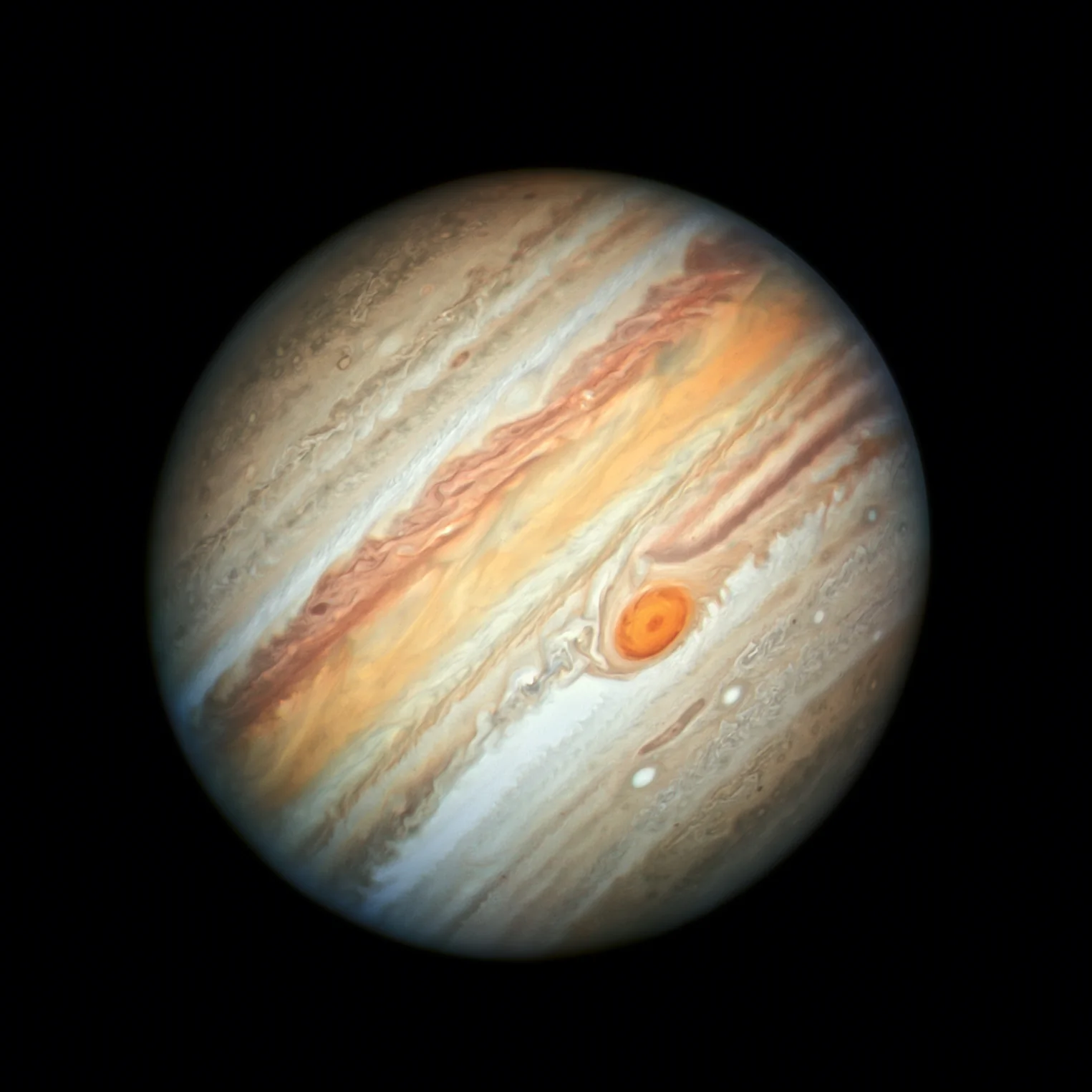 On gas planets like Jupiter the emergence of life is impossible. However, it is conceivable that a Jupiter-sized
planet is necessary to protect the planets of the inner planetary system from too many asteroid impacts.
To estimate the average number of habitable planets per planetary system, we first need to look at what such a planet requires. At present we can only make assumptions that seem plausible given the structure of the solar system and the history of Earth.
The first requirement is that the planet is rocky. Gas giants have no solid surface and a dense atmosphere consisting mainly of hydrogen and helium. In addition, high wind speeds and a strong radiation belt make microbial life highly unlikely. In short, without a solid planetary surface, it becomes very difficult for higher life to emerge.
The next condition for the emergence of life is the existence of liquid water. It serves as a solvent and transport medium and facilitates the chemical reactions necessary for the formation of the building blocks of life. Without water, even the emergence of the simplest microbial life is difficult to imagine. The area in a planetary system where liquid water can exist is called the "habitable zone."
Evolution is a process by which life can adapt to changing environmental conditions. The slower the change, the more successful it is. For this reason, the planet's orbit should be stable. It should remain in the habitable zone for a very long time. For Earth, this has been the case for over 4 billion years. Computer simulations show that this orbital stability cannot be taken for granted.
The rotation axis should also be stable, because fluctuations in the rotation plane would quickly lead to extreme climate changes on the planet. These could also make the planet uninhabitable, even though it is in the habitable zone. An example of this would be a shift of the rotation plane toward the central star, so that part of the planet lies in permanent darkness.
Other factors are a matter of conjecture. Is a geologically active planet necessary, since only such planets can maintain a strong magnetic field? Should the planet have a moon that would stabilize the axis of rotation and create tides that would help life colonize the land? Is a large gas planet in the planetary system necessary to protect life on the inner planets from extinction by too many asteroid impacts? All these circumstances make it very difficult to estimate \(n_e\) directly.
Based on exoplanet observations with the Kepler Space Telescope, researchers estimate that there may be 40 billion Earth-like planets in the Milky Way in the habitable zone of Sun-like stars or red dwarfs. This suggests that the product of \(f_p\) and \(n_e\) is about 0.4:
$$\Large f_p * n_e \approx 0.4$$
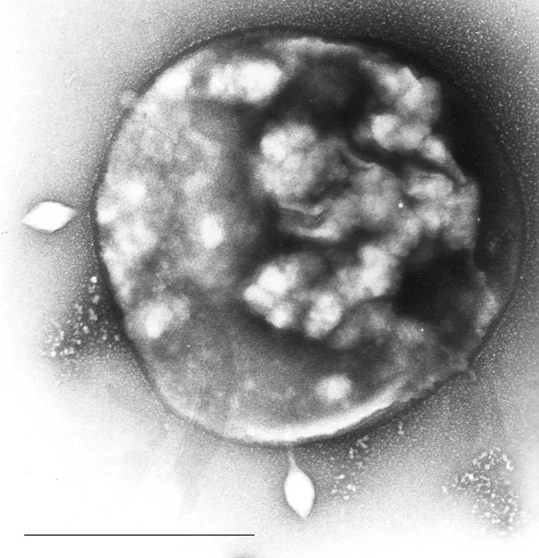 Archaea are single-celled organisms without a cell nucleus that are adapted to extreme environmental conditions. (Image Credit: user Xiangyux on Wikipedia)
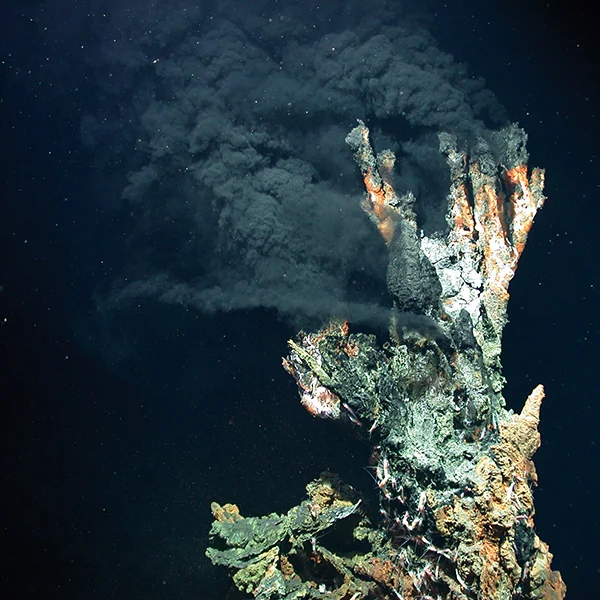 Archaea have been detected on Earth in the vicinity of so-called "black smokers". These are volcanic vents with thermal springs of up to 300 °C
located in the lightless depths of the oceans. (Image Credit: MARUM − Zentrum für Marine Umweltwissenschaften, Universität Bremen; CC-BY 4.0 )
This parameter describes how likely it is that life actually develops on a planet where it is possible in principle. Here we are talking about microbial life, so-called prokaryotes, the simplest single-celled organisms. It is a form of life that still exists on Earth today as bacteria and archaea. The only certainty is that the parameter must lie between 0 and 1.
$$\Large 0 < f_l < 1$$We do not have enough information to determine this parameter, but a look at the history of Earth shows that life developed rather quickly. Earth cooled down, the cosmic bombardment with asteroids stopped and after 300 million years, a short time in geological terms, the first primitive unicellular organisms emerged. This could have been a coincidence; however, it could also indicate that \(f_l\) is close to one, and there is a good chance of confirming this in the future.
If unicellular life arises comparatively quickly, it should have happened several times in parallel on the early Earth. This could be proven by finding bacteria that are not genetically related to any other life form on Earth. So far, none have been found, but that could also be because one type of microbial life eventually prevailed and displaced all others.
But Earth is not the only place in the solar system where life is conceivable. Mars and Earth were more similar in their early days than they are today. It is assumed that Mars also had oceans, a denser atmosphere, active volcanism and a magnetic field 4 billion years ago. Except for size, the two planets were probably very similar during the first 500 million years. If microbial life could form on Earth, why not on Mars?
Later, Mars cooled and lost its magnetic field and large parts of its atmosphere. Its surface water froze, and higher life could probably never develop. But if the formation of unicellular life is indeed rapid, perhaps fossil traces of it could be found on Mars as well.
The same also applies to Jupiter's moon Europa, under whose thick ice layers life could have formed in an underlying ocean. The energy source there would not be the Sun, but the volcanism of the moon caused by tidal friction.
The emergence of simple life cannot be ruled out for other planets and moons in our solar system. However, this has not been proven so far.
 If bacteria were found on Earth that are not related to any known life form, it would indicate that life arose independently several times.
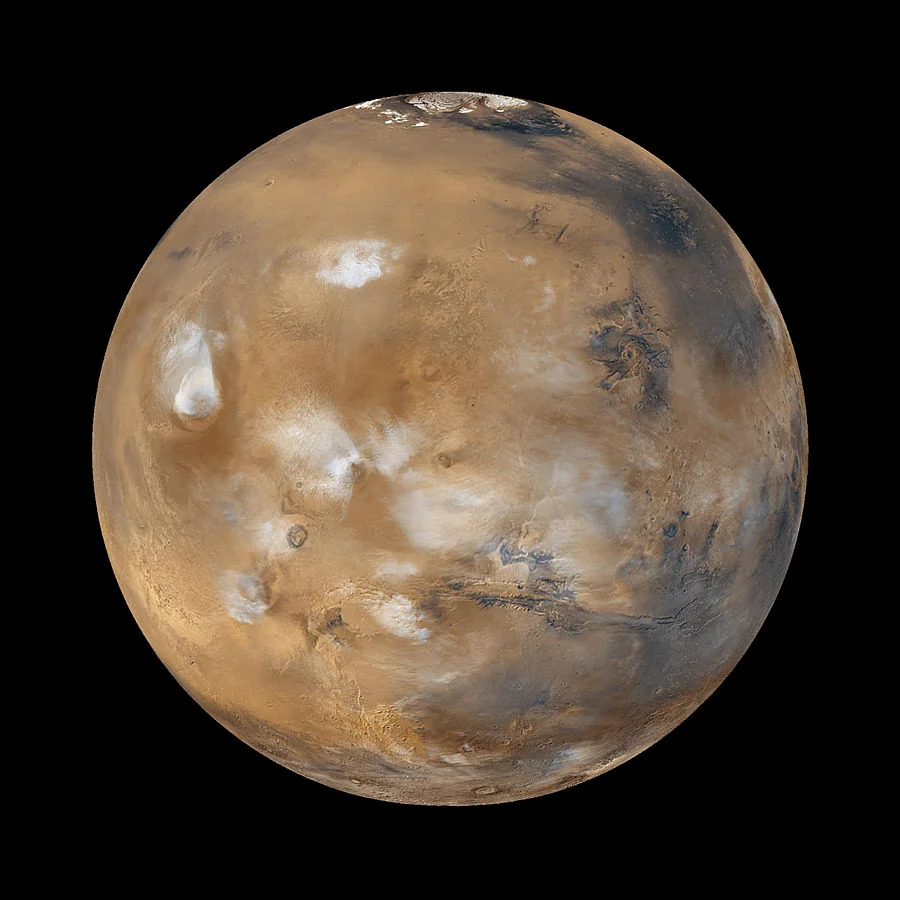 Evidence of traces of fossil life on Mars would suggest that life in the solar system originated on at least two planets.
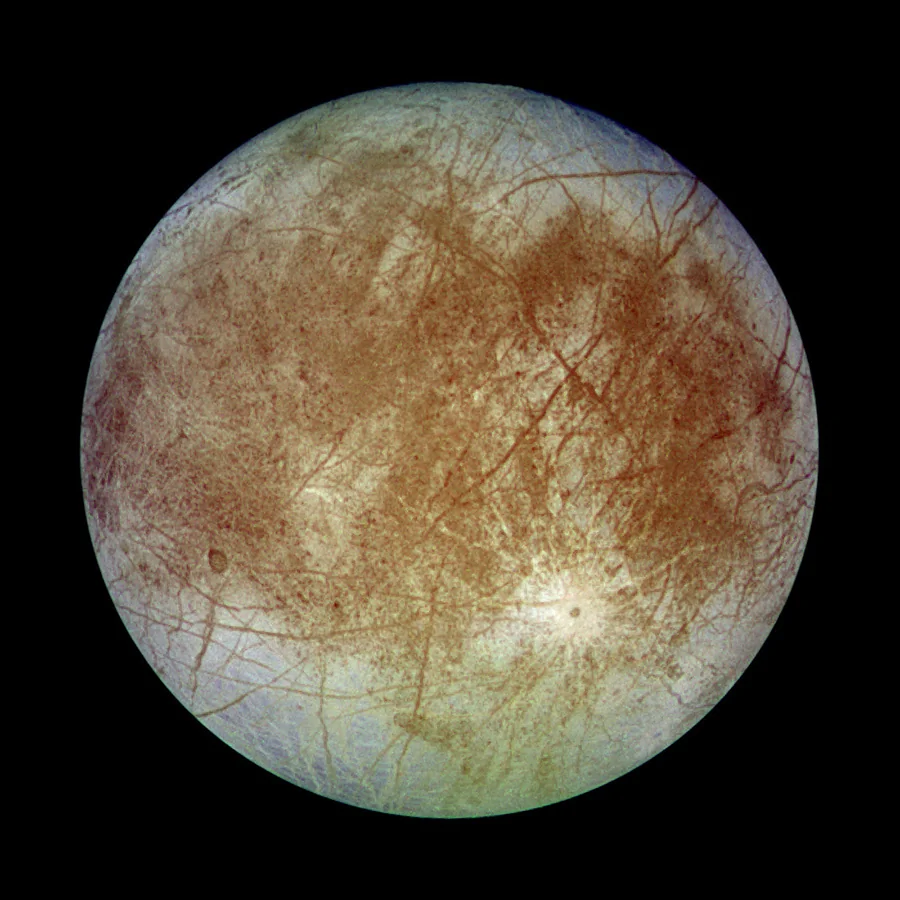 The discovery of microbial life on Jupiter's moon Europa would demonstrate that single-celled life can arise and survive permanently independent of direct sunlight.
The search for traces of fossil or recent life in the solar system will help to determine the factor \(f_l\) more precisely in the future. Currently, many authors assume that simple life could evolve as soon as it is physically and chemically possible.
$$\Large f_l \approx 1$$
If simple life emerged after 300 million years, why did the evolution to intelligent life take more than 4.5 billion years? Life remained unicellular for the first 2.5 billion years. If you could visit the Earth of that time, you would find a planet not unlike Mars, but with oceans - although Mars had those too in its early days. White clouds would pass through a shimmering orange, oxygen-poor atmosphere. There were few visible traces of life. Among them were stromatolites, limestone formations whose slimy surfaces were one of the few visible signs of microbial life.
Two billion years ago, the first cyanobacteria had begun to produce oxygen. Then, only a little later on the scale of Earth's history, something happened that was to fundamentally change the further development of life. Somewhere, perhaps at the edge of a geothermal spring or in a tidal pool at the seashore, several bacteria entered into a symbiosis and formed a new cell type. More importantly, this new cell type was able to reproduce and thus survived!
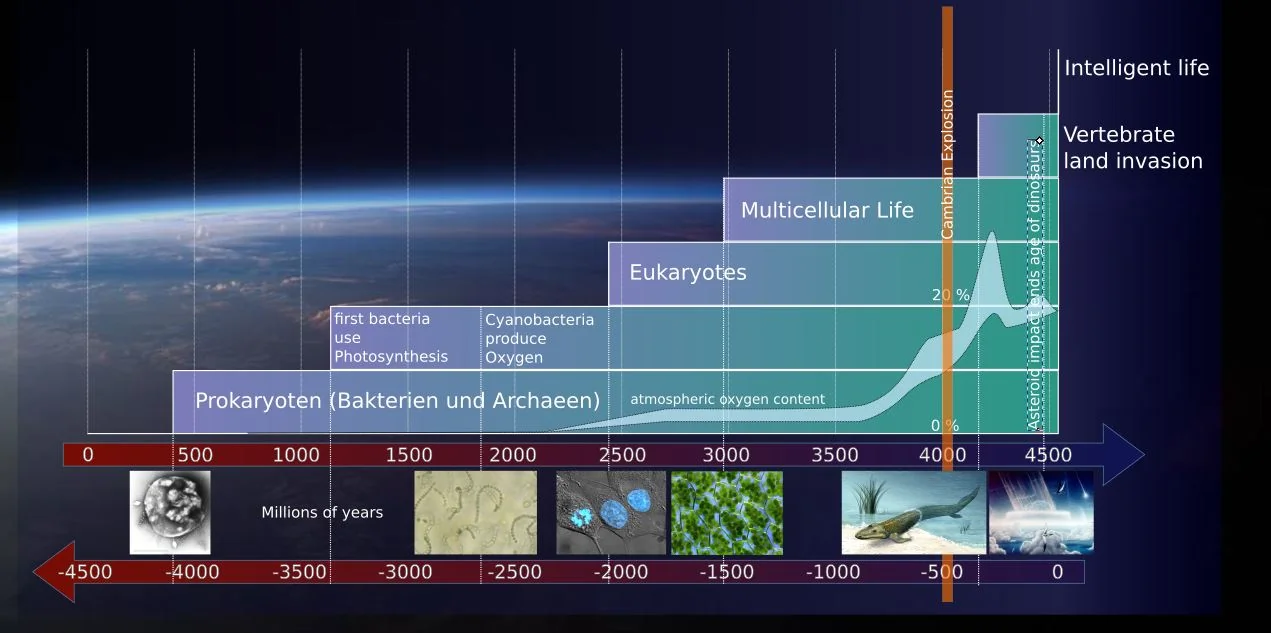 Important evolutionary steps on the way to intelligent life.
The transition from prokaryotes to eukaryotes was complete. In the cells, mitochondria now supplied the cell with energy, the nucleus contained the genetic material, and a cell membrane protected the new cell. A new type of unicellular life had emerged. Larger cells that could work more effectively through division of labor. On a geological scale, shortly thereafter, the first multicellular organisms emerged. It is a step in evolution that prokaryotes never managed to take, but which eukaryotes took independently more than 25 times.
Vertebrates and plants would later develop from multicellular organisms, but the colonization of the land would have to wait for another billion years. Today this period is called the "Cambrian explosion". In a short time span of 5 to 10 million years, the precursors of all species known today developed. Every plant, every insect, every vertebrate that we know today or of which fossils have ever been found only came into being in the last 500 million years.
For the factor \(f_i\) this could mean that the formation of intelligent life takes a very long time. This is not certain, and there may well be good reasons why it has taken a long time on Earth. However, statistical studies suggest that it is more likely that \(f_i\) is significantly less than 1 [3].
$$\Large f_i << 1$$
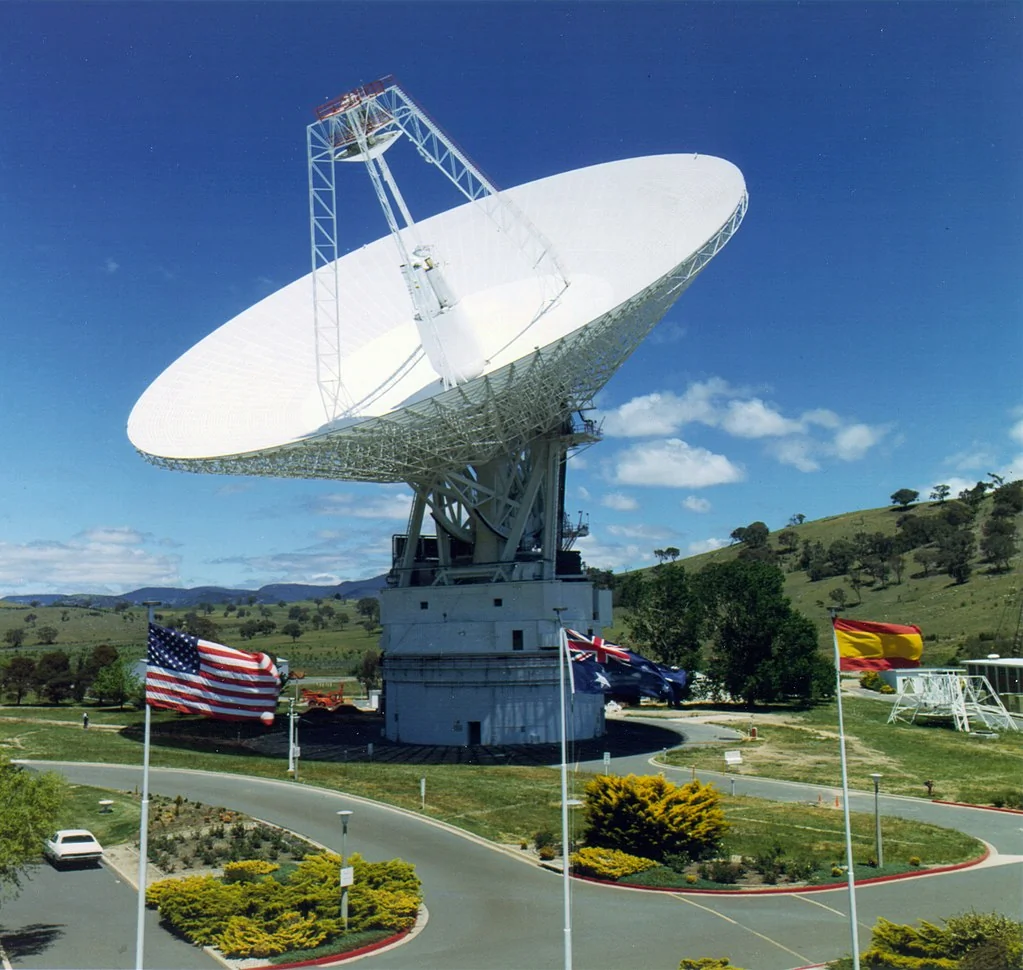 70-meter parabolic antenna of the "Canberra Deep Space Communication Complex". (Image Credit: NASA; via Wikimedia Commons)
A civilization will inevitably send signals into space at certain points in its technological development. This could be a conscious decision, but it is considerably more likely that they are technology signatures, such as radio waves, which are emitted only as a side effect.
The analog signals from Earth's first radio transmissions have now penetrated more than 100 light-years into space. However, since their transmission strength decreases with the square of the distance, they are likely to be very difficult to receive, if at all. By their very nature, terrestrial radio transmissions radiate only little energy into space. Anything else would be a waste, since all the receivers are on Earth.
The time of strong radio emissions on Earth is coming to an end. The frequencies are getting higher and higher in order to transmit data faster; transmission power is decreasing because receiver technology has improved. Television towers are increasingly being replaced by geostationary satellites, which use much less transmitting power. If they still transmit, it is often with directional radio. Radio and television transmissions are increasingly being delivered via the Internet's cable networks. Where terrestrial broadcasting still exists, it uses compressed digital formats that are difficult to distinguish from noise.
But not all communication is terrestrial. Once a civilization begins to explore its planetary system, it will need to communicate with its own spacecraft. For this type of communication, large radio antennas will be built to deliver their energy in a specific direction, and if the signals are delivered in pulse form, much higher transmission strengths can be achieved. The range of the signals is much greater, but they are sent only in the direction of the spacecraft and therefore can be received only in planetary systems behind it.
A direct message to extraterrestrial civilizations has been sent from Earth into space only once so far. In 1974, the Arecibo radio telescope sent the so-called "Arecibo message" in the direction of the globular cluster M13, 25,000 light-years away. The message consisted of 1679 bits of information which, arranged in a grid of 73 rows and 23 columns (both prime numbers), form a simple picture. Among other things, it shows humans, numbers in binary code, binary codes for the five most important elements of biochemistry (hydrogen, carbon, nitrogen, oxygen and phosphorus) and a description of the solar system.
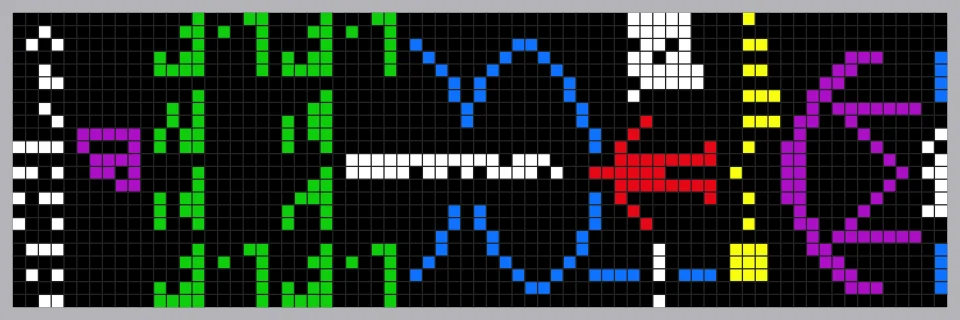 The Arecibo message was sent in 1974 in the direction of the globular cluster M13. (Image Credit: Norro via Wikimedia Commons)
Sending it was more of a symbolic act than a real attempt at communication, because the whole transmission lasted only 3 minutes! [6] The energy required to actively send signals into space is enormous, and the benefit is questionable. In which frequency band, and how, should signals be sent? With radio waves or rather lasers? Furthermore, there could be good reasons why civilizations, despite having the capability, do not want to communicate or even actively obscure the technology signatures of their planet.
Any estimate of \(f_c\) remains pure speculation. Still, it is plausible to assume that, owing to involuntary radio emissions alone, the probability is significantly greater than 0. However, the comparatively short range severely limits the receivability of the signals. Transmission and reception technology has made enormous progress in the last 50 years. By interconnecting several radio telescopes, it is now possible to create virtual antennas on a scale that seemed unthinkable a few years ago. In 2012, for the SETI project, several radio telescopes distributed around the globe were connected for the first time by means of Very Long Baseline Interferometry in order to examine the star Gliese 581, 20 light-years away, for radio emissions. Nothing was found. [8] Detection of faint signals from several light-years away is now, if not already within the realm of the technically possible, at least within the realm of the technically conceivable.
But radio emissions are not the only detectable technology signature. It is conceivable that future generations of infrared telescopes could directly detect the heat signature of cities on exoplanets. Better optical telescopes could detect space debris in orbit around a planet, or large-scale technological structures "parked" at Lagrangian points or in geostationary orbit around a planet. An optimistic upper limit for \(f_c\) is therefore assumed to be 0.6.
Perhaps it is more difficult than expected to detect the technology signatures of other civilizations. Most communication on Earth today is encrypted, compressed, and digital. To outsiders, it might sound like noise. In the original formulation of the Drake equation \(f_c\) was estimated to be 0.1 to 0.2. Therefore, 0.1 will serve as the lower limit here.
$$\Large 0.1 < f_c < 0.6$$
Although actively transmitting civilizations are unlikely, it is reasonable to assume that a technological civilization should be detectable in its immediate vicinity through its involuntarily emitted signals alone. The total period of detectability depends on many factors. However, the lifetime of the technologically active civilization plays a crucial role.
How long does a technological civilization last? The lifetime could be limited by natural disasters on a planetary scale. Asteroid impacts, neighboring supernovae, gamma-ray bursts, or increased stellar activity have the potential to adversely affect a civilization or all life on a planet. Technological civilizations may be able to protect themselves to some extent from such events, but Earth history shows that mass extinctions are not uncommon.
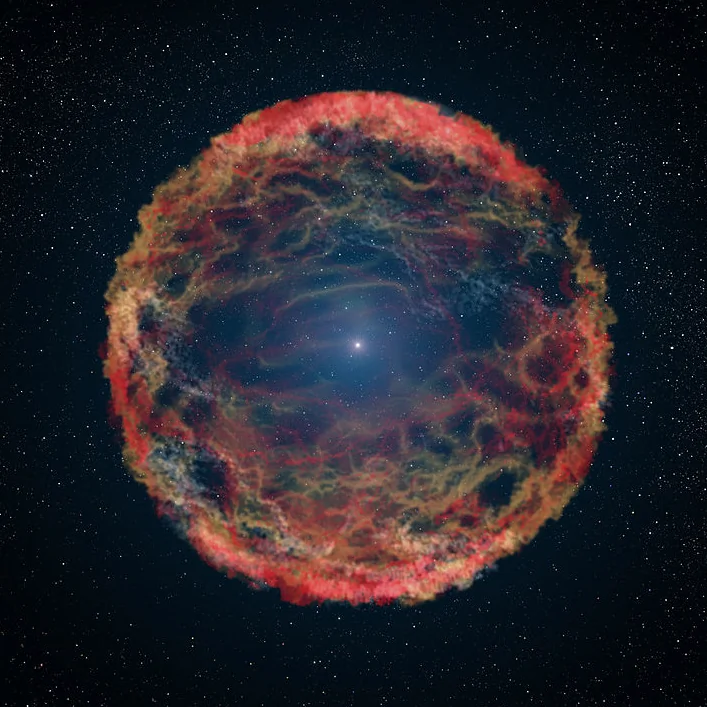 A supernova caused by the death of a massive star ends life in a planetary system.
(Image Credit: NASA, ESA, and G. Bacon (STScI); via Wikipedia.org)
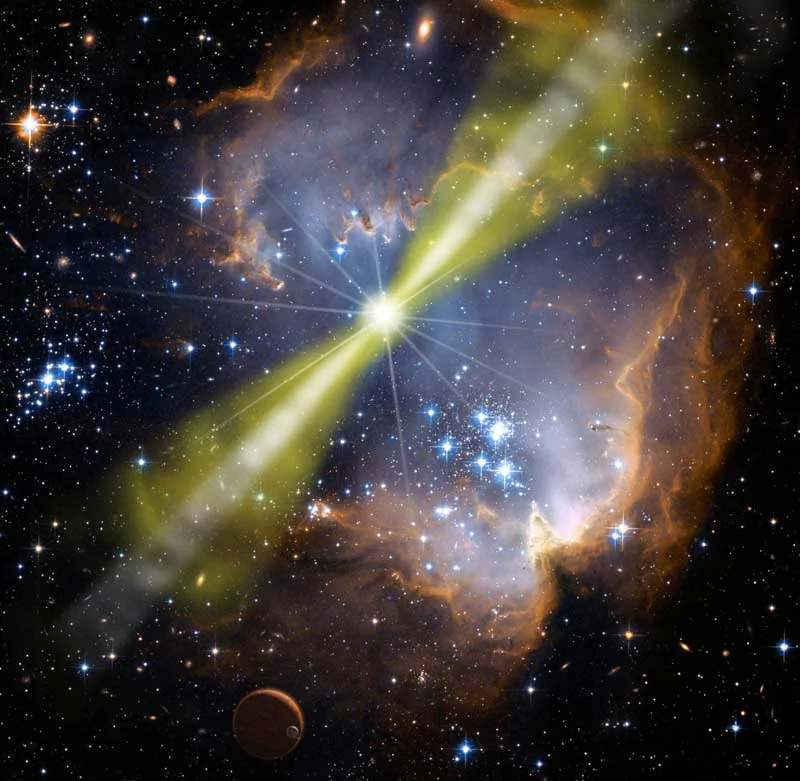 In the wrong place at the wrong time. Gamma-ray bursts are directed bursts of electromagnetic energy associated
with supernovae. It is believed that life in planetary systems up to 16,000 light-years away can be destroyed by gamma-ray bursts.
(Image Credit: NASA/Swift/Mary Pat Hrybyk-Keith and John Jones; via Wikipedia.org)
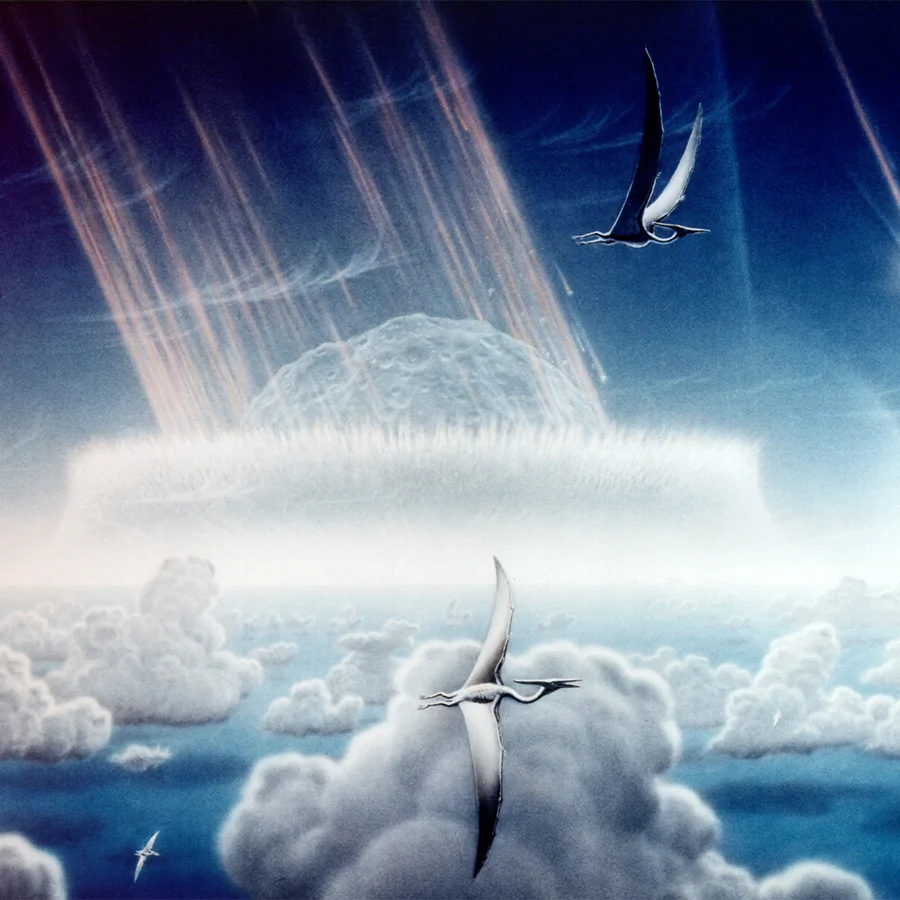 An asteroid impact, like the one on Earth 65 million years ago, could trigger a global catastrophe and put an end to intelligent life.
(Image Credit: Donald E. Davis; via Wikimedia Commons)
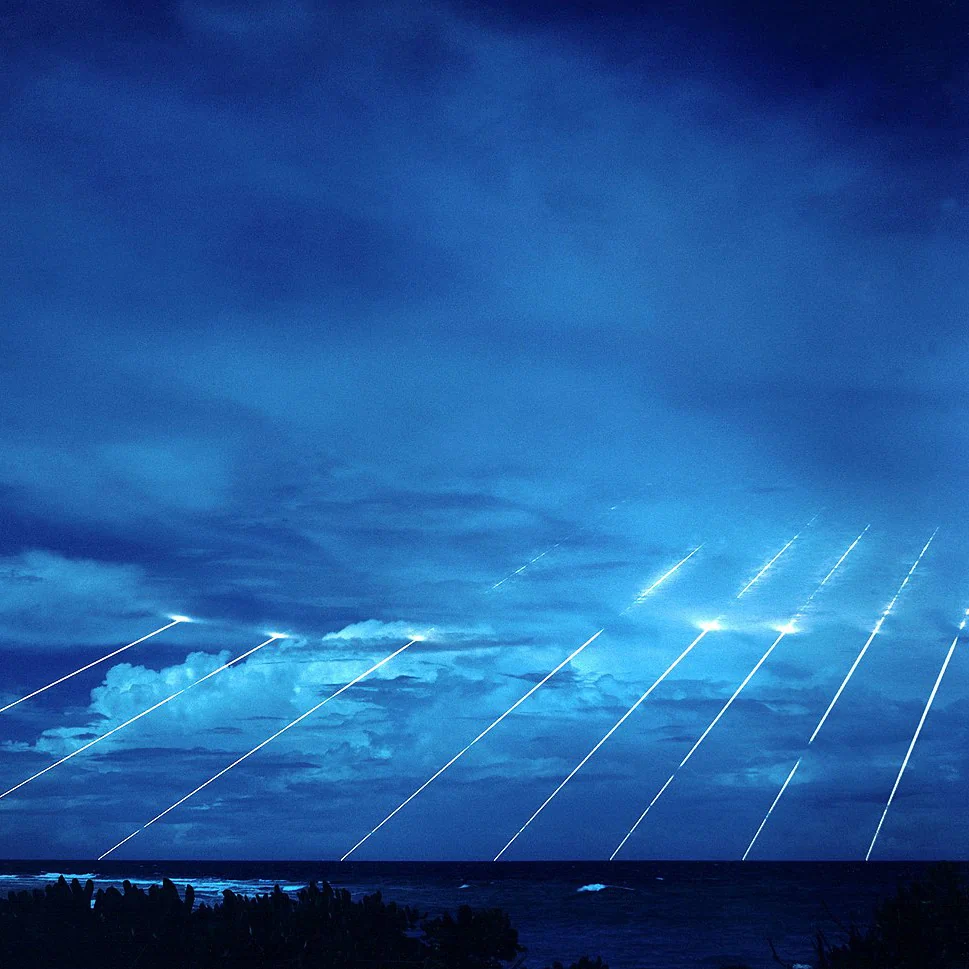 The sight of multiple nuclear warheads on their final approach could be the last you see of a technological civilization.
(Image Credit: David James Paquin; via Wikipedia.org)
A study of 60 past civilizations on Earth concluded that the average lifespan of such a civilization is 420 years. [7] But how meaningful are such numbers? The decline of one civilization on Earth has usually been synonymous with the rise of another. Populations and technologies were often assimilated.
Should we not rather speak of a single "human civilization" when it comes to Earth? On our planet there have been traces of different cultures for at least 5000 years and a line of development that can be drawn from the cultures of early times to the present day. It shows in the language families and in cultural and scientific traditions. Why do we calculate with Arabic numerals worldwide today and not with Roman numerals? Why are Latin letters even on Chinese car license plates? The cultures on Earth do not exist in isolation; they build on each other. The "world culture" of today is a mixture of the accumulated traditions and experiences of different civilizations over a period of more than 5000 years.
Of these 5000 years, however, only the last 250 years since the beginning of the Industrial Revolution can be considered technological. During this time, mankind has managed to cause lasting damage to the vital ozone layer and to influence the climate several times. For example, severe air pollution in the second half of the 20th century led to a decrease in the amount of solar radiation reaching the Earth's surface. This effect, called "global dimming", was so alarming to some researchers in the 1970s that they feared a man-made ice age. This effect masked the rise of greenhouse gases in the atmosphere, and now that the atmosphere is cleaner in many places, we are seeing signs of global warming. Humanity has arrived in the Anthropocene, a (so far only proposed) geologic age in which humans have become the most important influence on the planet's ecosystem.
Perhaps the age of mankind as a technological civilization should be put at only about 80 years. This is the period since the detonation of the first atomic bomb in 1945, a weapon that for the first time made it possible to destroy the entire biosphere of the planet. Currently, nine nations have an estimated total of 14,000 nuclear warheads. More than enough to set back life on the planet by several hundred million years.
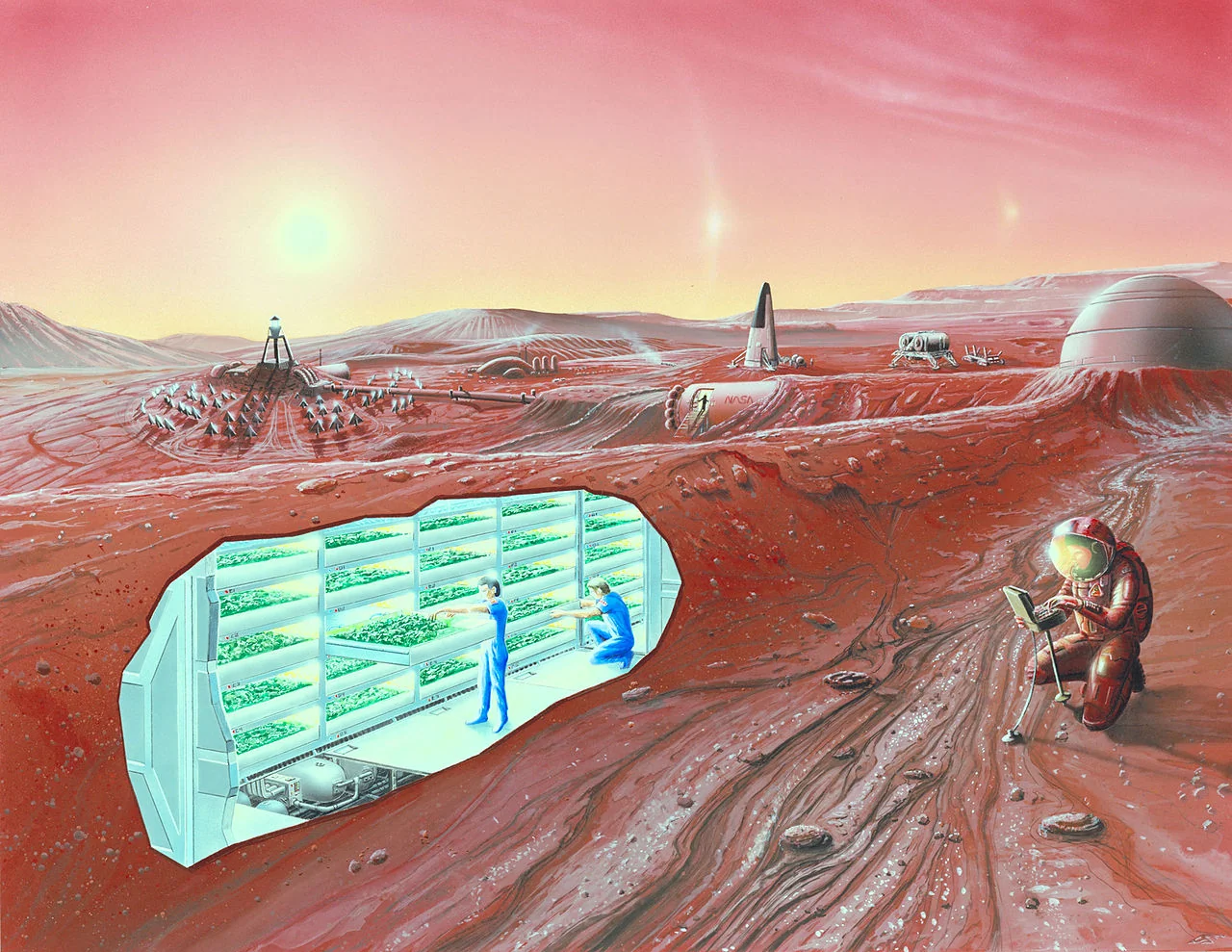 Artist's rendering of a Martian colony in the future. Technical civilizations could increase their survivability by colonizing their planetary system.
(Image Credit: NASA Ames Research Center via Wikipedia)
The optimistic assumption is that a civilization that has reached a certain level of technology can survive for a very long time. Mankind has proven that it can influence Earth's climate in one direction or another. A civilization could use this knowledge to deliberately influence the climate by means of geoengineering. Be it to protect itself from the consequences of self-inflicted global warming or to neutralize the consequences of a changed energy output of its home star.
Even the use of nuclear weapons would not necessarily destroy a planetary civilization completely. On Earth, for example, the population is essentially concentrated in the northern hemisphere. Hydrogen bombs cause comparatively little radioactive fallout and the transfer of radioactive material from the northern to the southern hemisphere is rather small due to largely separated wind systems. Thus, only part of a planetary civilization could be affected by a "global" thermonuclear war.
Even if the infrastructure of Earth's northern hemisphere were largely destroyed, people in Africa, South America or Australia would still know how semiconductors and transformers work. Most production facilities would be destroyed, but the basic knowledge would remain. Computer technology at the level of the 1980s could be produced comparatively quickly in Africa as well.
The optimistic estimate for the life span of a civilization is therefore "very long". It is conceivable that a technologically highly advanced civilization could exist for several thousand or even millions of years. If it is not able to leave its planetary system, the limited life span of its central star will eventually put an end to it. If, however, it succeeds in leaving its own star, there would be practically no limits to its survival.
$$\Large L >> 1000$$
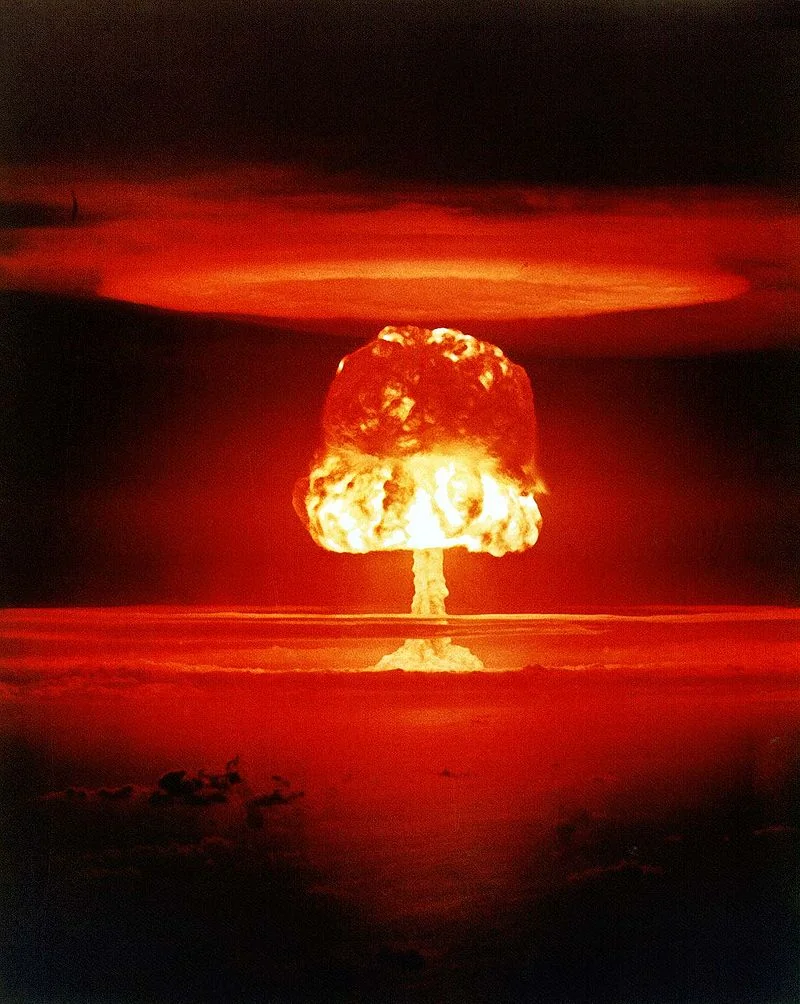 Castle Romeo: Test of an 11 Mt hydrogen bomb. Does the risk of technological civilizations destroying themselves rise
with their level of technology?
On Earth, mankind could probably survive for about another billion years. After that, Earth will be a hot planet without oxygen, uninhabitable for higher life [10]. At that time, Mars could offer the more hospitable alternative for a high-tech civilization, because the Sun's habitable zone will shift outward as solar activity increases.
There is evidence that Mars has not completely lost its oceans, but that they are merely frozen. If the habitable zone were to be extended to the orbit of Mars, they could thaw again and provide liquid surface water for at least several million years and create a denser atmosphere.
It is conceivable that the very traits that make a species dominant on its planet are detrimental to its long-term survival. The pessimistic assumption is therefore that highly developed civilizations tend to self-destruct. If not by wars, then by destruction of their own ecosystem. Such a civilization endangers itself by discovering nuclear fission and nuclear fusion, is not able to control the negative consequences of its own technological development, and is on the verge of self-destruction whenever internal conflicts arise.
$$\Large L < 1000$$
There is little point in asking for the result of the Drake equation at this time. The result can be close to zero or show hundreds of millions of detectable civilizations, depending on the choice of parameters. But nobody comes to this website to read that. So let's calculate two example scenarios, one optimistic and one pessimistic.
In the optimistic scenario, we assume that three stars offering potentially habitable conditions are formed per year. The emergence of intelligent life is virtually inevitable and half of all civilizations emit detectable signals. The civilizations have an average lifetime of one million years.
\begin{equation} \Large \nonumber N = 3.0 \cdot 1 \cdot 0.4 \cdot 1\cdot 0.5 \cdot 1000000 = 600000 \end{equation}In this scenario, there are currently about 600,000 civilizations in the Milky Way that could in principle be contacted.
In the pessimistic scenario, we assume that only 1.5 stars offering conditions suitable for life are formed per year. The emergence of intelligent life takes a long time and happens only in one out of a hundred cases. Only 10% of technological civilizations emit detectable signals and the average lifetime of a civilization is only 1000 years.
\begin{equation} \Large \nonumber N = 1.5 \cdot 1 \cdot 0.4 \cdot 0.01 \cdot 0.1 \cdot 1000 = 0.6 \end{equation}According to this scenario, not even a single communicating technological civilization would exist within the Milky Way. We know that there is at least one, but statistically the result only means that intelligent life is extremely rare and that another, comparable galaxy might not contain a single civilization.
This result does not exclude the possibility that there are thousands or even millions of other planets in the Milky Way where life exists, as long as it remains below the threshold of a detectable technological civilization. Earth did not cross this threshold until 100 years ago, when radio technology began to take hold. Taking a pessimistic view of the detectability of radio signals, we may still be below it. In such a scenario, the only communication attempt from Earth that could ever be detected would have been the 3 minutes of the Arecibo signal.

The story of the first 3.5 billion years of life on Earth. From chemical evolution through prokaryotes and photosynthesis to the first multicellular life forms.

Where is the second Earth? About the methods and the current state of exoplanet discovery.

Of Moon and Mars civilizations. About the historical beginnings of the search for life in space.
How "Terra-X" a documentary format by german public service broadcaster ZDF failed at flat earth debunking.