Visit the miraculous world of pre cambrian life forms. The Ediacara biota is a group of mostly soft-bodied organisms that lived during the Ediacaran period 635-538 million years ago.

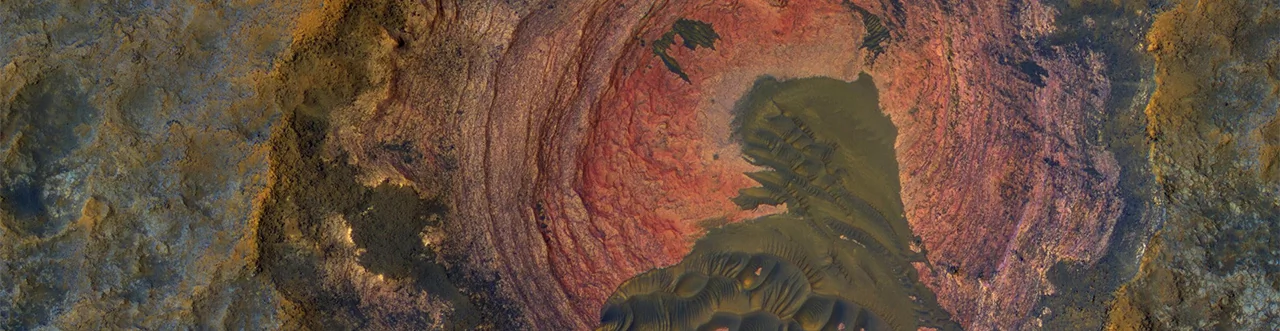 This image does not show an exoplanet but the surface of Mars
How many planets are there? Ever since people began observing the sky, they have wondered whether other stars have planetary systems too. The idea that there are other worlds similar to our own was already discussed by the ancient Greeks. The following quote is attributed to the Greek philosopher Democritus of Abdera (460/459 BCE - 371 BCE) [1]:
"In some worlds there is no Sun and Moon, in others they are larger than in our world, and in others more numerous. In some parts there are more worlds, in others fewer ..."
Later, in 16th-century Europe, Giordano Bruno, an Italian priest and scholar, also believed that the universe is infinite and that it contains an infinite number of inhabited worlds.
 Giordano Bruno (1548-1600): "I maintain that the universe is infinite, that a countless number of celestial bodies exists: stars, earths, suns."
This view, however, was rather unpopular with the Church and one of the reasons why Giordano Bruno was sentenced to death at the stake for heresy by the Inquisition in the year 1600. Isaac Newton later voiced the same idea in the more science-friendly climate of 18th-century England. In his essay "General Scholium" [4] he, too, supposed that planetary systems must exist around other stars.
In the period that followed, astronomers increasingly came to believe that other stars could have planetary systems as well. For a long time, however, there was no way to prove it. In 1952, the Russian-American astronomer Otto Struve proposed that planets could orbit their star at a much smaller distance than is the case in the Solar System. Based on this idea, more than 40 years before the first confirmed discovery of a "hot Jupiter", he suggested Doppler spectroscopy and the transit method as possible detection methods. Today, both are among the most successful methods of exoplanet detection.
It would take more than another 35 years until the Canadian astronomers Bruce Campbell, G. A. H. Walker and Stephenson Yang of the University of Victoria and the University of British Columbia reported the first exoplanet discovery in 1988. They used Doppler spectroscopy to detect an exoplanet around the star Gamma Cephei [2]. Their data, however, were not conclusive, and so they retracted the discovery in 1992 [6]. It was not until 2002, after several more years of observations, that the planet was finally confirmed [3]. Today it is called "Gamma Cephei Ab" or "Tadmor". This shows that discovering exoplanets is difficult and often takes place at the limit of what is technically possible.
Further discoveries followed in the years after. As early as 1992, Aleksander Wolszczan and Dale Frail used pulsar timing to detect two planets around the pulsar PSR B1257+12 [7]. They are considered the first confirmed exoplanets of all, although they do not orbit an ordinary star but the remnant of a supernova.
In 1995, Michel Mayor and Didier Queloz found 51 Pegasi b, the first exoplanet around a Sun-like star. Both were awarded the Nobel Prize in Physics for this discovery in 2019. 51 Pegasi b was the first known member of a new class of exoplanets, the "hot Jupiters". These are gas planets that orbit their star at a small distance, are therefore very hot (>900 K) and have orbital periods of only one to five days. This kind of exoplanet is practically predestined for detection by Doppler spectroscopy.
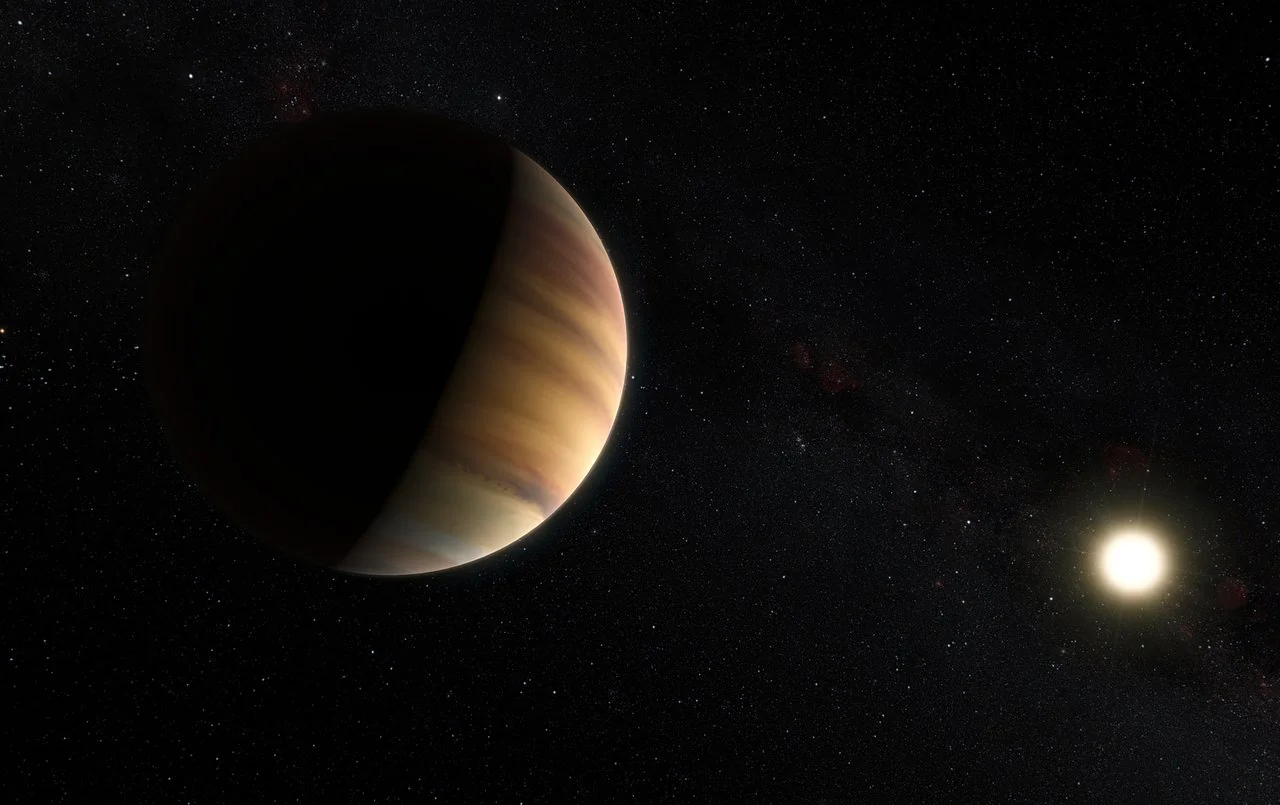 Artist's impression of the exoplanet 51 Pegasi b, a member of the "hot Jupiters". (Image credit: ESO/M. Kornmesser/Nick Risinger (skysurvey.org); CC BY 4.0)
In 1999, an exoplanet was found with the transit method for the first time. It orbits the star HD 209458, 160 light-years from Earth. HD 209458 b is also a gas giant, with 69% of the mass of Jupiter. It, too, is a "hot Jupiter" that orbits its star at a small distance. Its heated atmosphere, however, makes it 1.3 times larger than Jupiter.
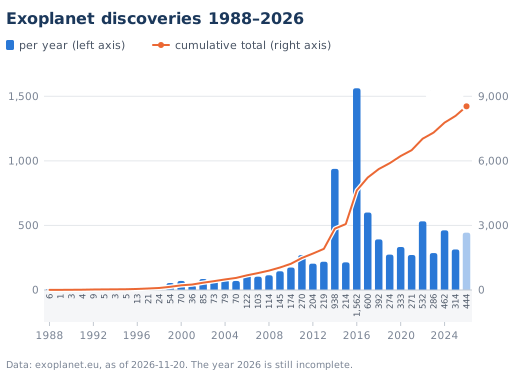
By now it may seem self-evident that planetary systems are nothing exceptional in the universe, but the discovery of the first exoplanets dates back only a few decades. Since the discovery of 51 Pegasi b in 1995, more have been found in rapid succession. Technology had advanced far enough for a new branch of astronomy to establish itself.
The list of exoplanet discoveries maintained by the "Extrasolar Planet Encyclopaedia" is growing constantly and currently (as of November 2026) contains more than 8500 entries. [5] The exoplanet catalog will nevertheless remain incomplete, because it is merely a collection of discoveries whose physical properties allow them to be detected by the observation methods in use, within the limits of their measurement accuracy.
The chart above shows the number of exoplanet discoveries per year as well as the total number of confirmed finds. The cluster of planet discoveries in the years 2013-2016 is due to data from the Kepler space telescope. This was a space telescope with a very sensitive observing system whose primary purpose was the discovery of new exoplanets.
Its successor is the space telescope TESS. The James Webb Space Telescope, by contrast, mainly serves to study already known exoplanets in more detail, for example their atmospheres, but has also discovered new planets itself (see below).
ESA's PLATO mission is intended to continue the search for Earth-like planets around Sun-like stars. Thanks to improved methods and new large ground-based and space telescopes, further discoveries can be expected in the future.
The following interactive chart shows the mass and orbital period of all exoplanets from the catalog of the "Extrasolar Planet Encyclopaedia" for which both quantities are known. The selection can be filtered by detection method, type of host star, year of discovery and the amount of radiation received.
The number of discovered Earth-like rocky planets is still small. With a realistic interpretation of the term "Earth-like" it is zero, because the Earth-like planets that can be found mostly have very short orbital periods and orbit very small stars (red dwarfs), owing to the limitations of the techniques used. Such conditions, however, lead to a synchronous rotation of the planets, in which one side is shrouded in permanent night while the other always faces the star. Conditions like these are neither Earth-like nor friendly to life. The media often fail to mention this when they report on the discovery of a "second Earth".
The discovery of a rocky planet that is comparable to Earth in terms of mass, distance from its star and irradiation is still pending. We have not yet found a "second Earth", but that is only a matter of time, because the chart also shows that Earth, with its parameters, will soon lie within the range of what can be reliably detected. It may currently still sit at the edge of that range, but it is no longer far away from it.
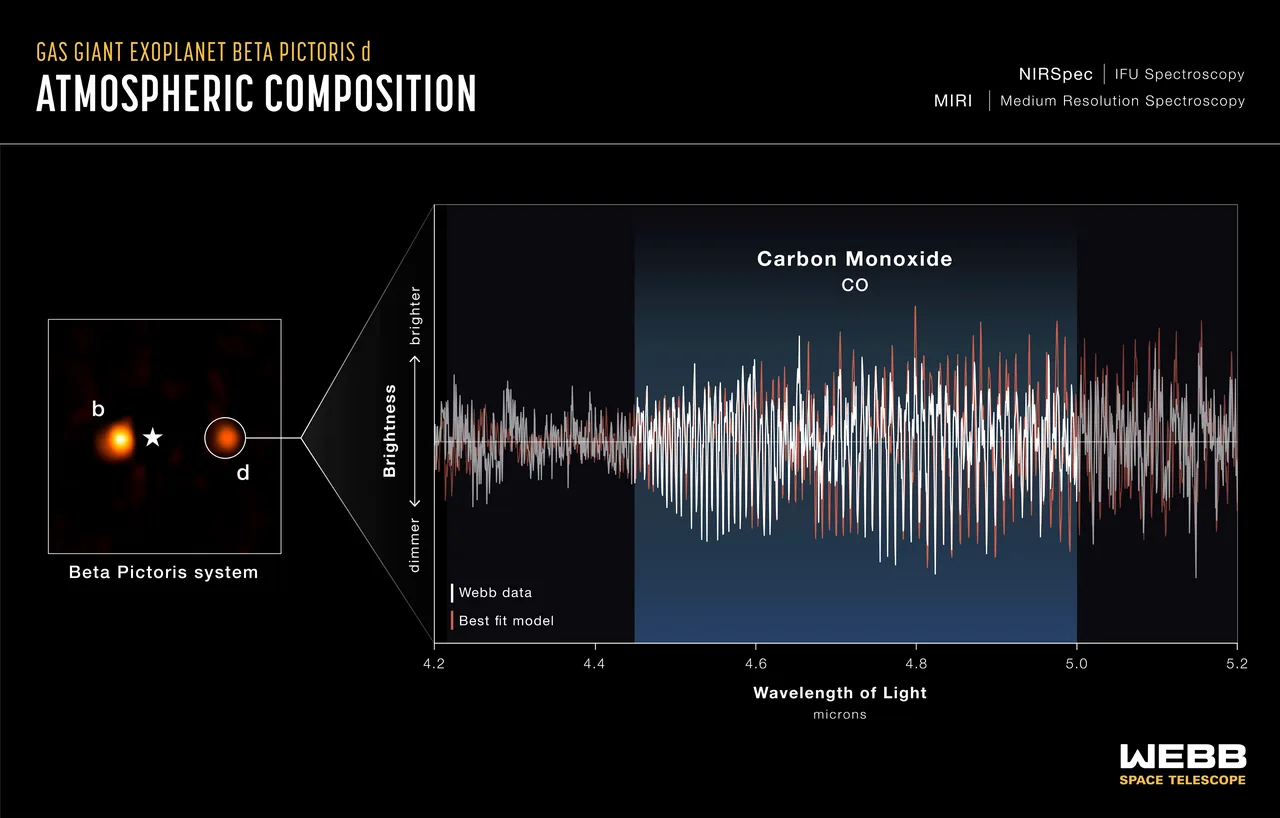 Left: The planets Beta Pictoris b and d, observed with the NIRSpec spectrograph of the James Webb Space Telescope.
Right: Spectrum of Beta Pictoris d with the signature of carbon monoxide.
(Image credit: NASA, ESA, CSA, STScI, L. Hustak (STScI). Science: A. Gibbs (UC San Diego), J. B. Ruffio (UC San Diego), A. Bidot (STScI). Image Processing: A. Pagan (STScI); CC BY 4.0)
The Beta Pictoris system, about 63 light-years away, is one of the best-studied young planetary systems. Two gas giants, Beta Pictoris b and c, were already known there. In July 2026, two teams independently reported a third planet. One team used the NIRSpec spectrograph of the James Webb Space Telescope and was able to distinguish the planet from background sources by the chemical signature of carbon monoxide in its atmosphere. A second team imaged it directly with the ERIS instrument at ESO's Very Large Telescope and subsequently also found it in archival images up to eleven years old.
Beta Pictoris d is about 2.4 times as massive as Jupiter, orbits its star at a distance of roughly 26 AU and is about a hundred times fainter than Beta Pictoris b. This makes the system only the second one known with at least three directly imaged planets.
Sources: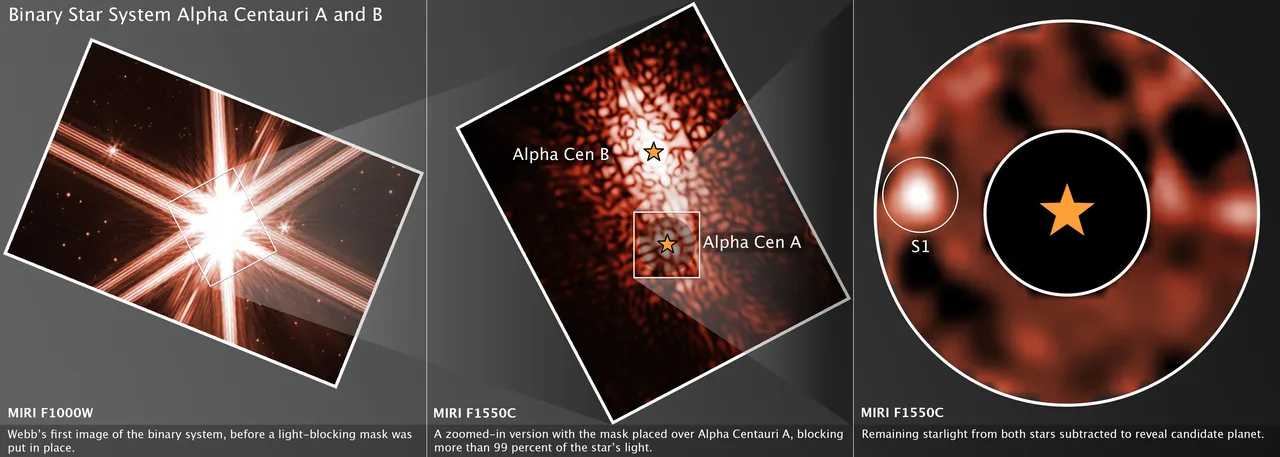 Images of the binary star Alpha Centauri A and B taken with the MIRI instrument of the James Webb Space Telescope.
In the right-hand image the light of both stars has been removed, revealing the planet candidate S1.
(Image credit: NASA, ESA, CSA, STScI, A. Sanghi (Caltech), C. Beichman (JPL), D. Mawet (Caltech), J. DePasquale (STScI); CC BY 4.0)
Using the coronagraph of its MIRI instrument, the James Webb Space Telescope has found the strongest evidence so far for an exoplanet around Alpha Centauri A. This is the Sun-like primary star of the Alpha Centauri system, only 4.4 light-years away. The candidate could be a gas giant with roughly the mass of Saturn that orbits its star at one to two times the distance between Earth and the Sun. That would place it within the star's habitable zone. Life as we know it, however, would not be possible on such a gas giant. The planet has not been confirmed yet.
Source: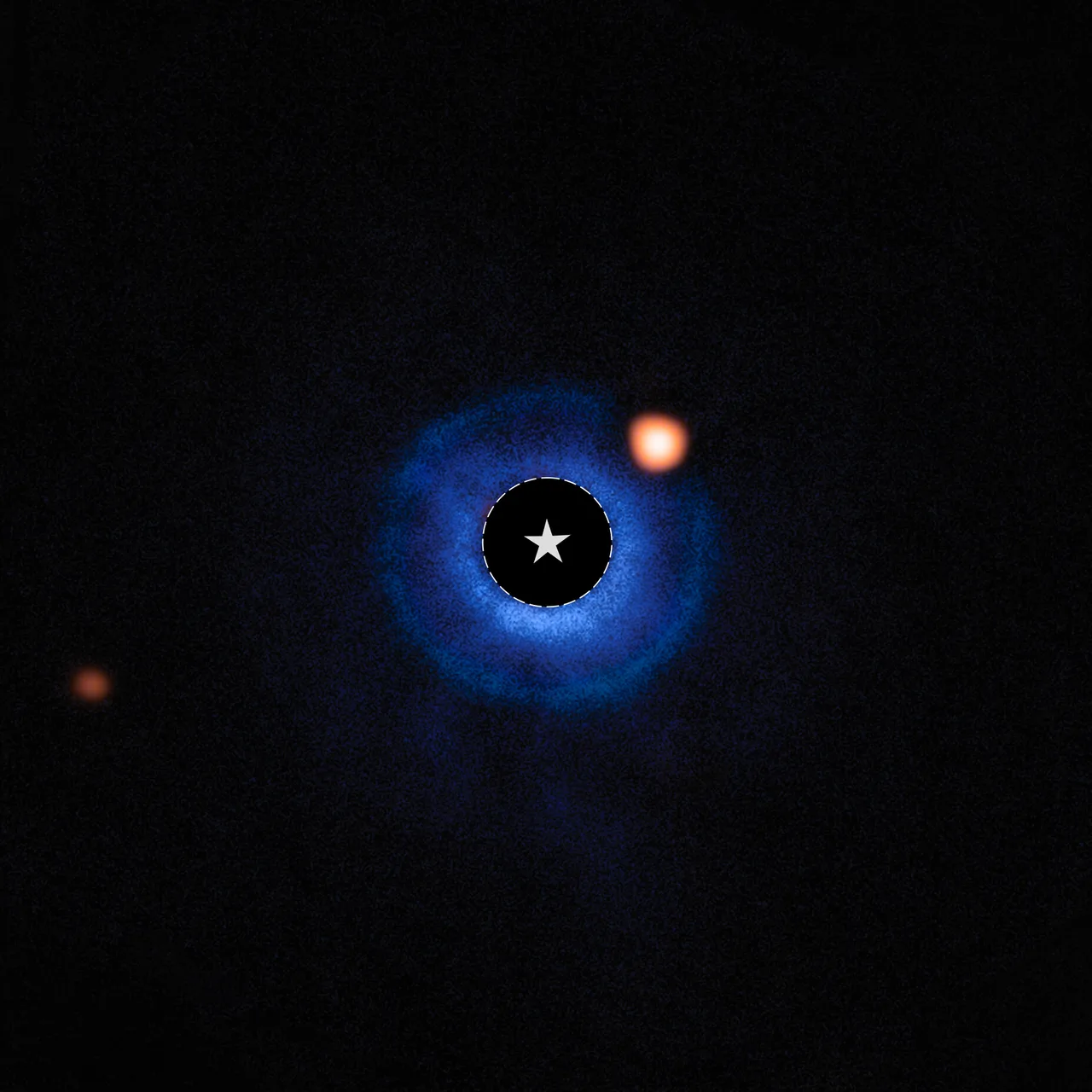 The debris disk around the young star TWA 7. The bright spot at the upper right is the planet candidate TWA 7 b.
(Image credit: ESA/Webb, NASA, CSA, A.M. Lagrange, M. Zamani (ESA/Webb); CC BY 4.0)
Using the coronagraph of its MIRI instrument, the James Webb Space Telescope has directly imaged an object in the debris disk around the young star TWA 7 that is very likely a planet. TWA 7 b would be the first exoplanet that JWST itself has discovered in this way. With roughly the mass of Saturn, it would also be the lightest exoplanet directly imaged so far. It is located in a gap in one of the dust rings around the star, which is about 111 light-years away, exactly where a planet of this mass shaping the debris disk was expected.
Source: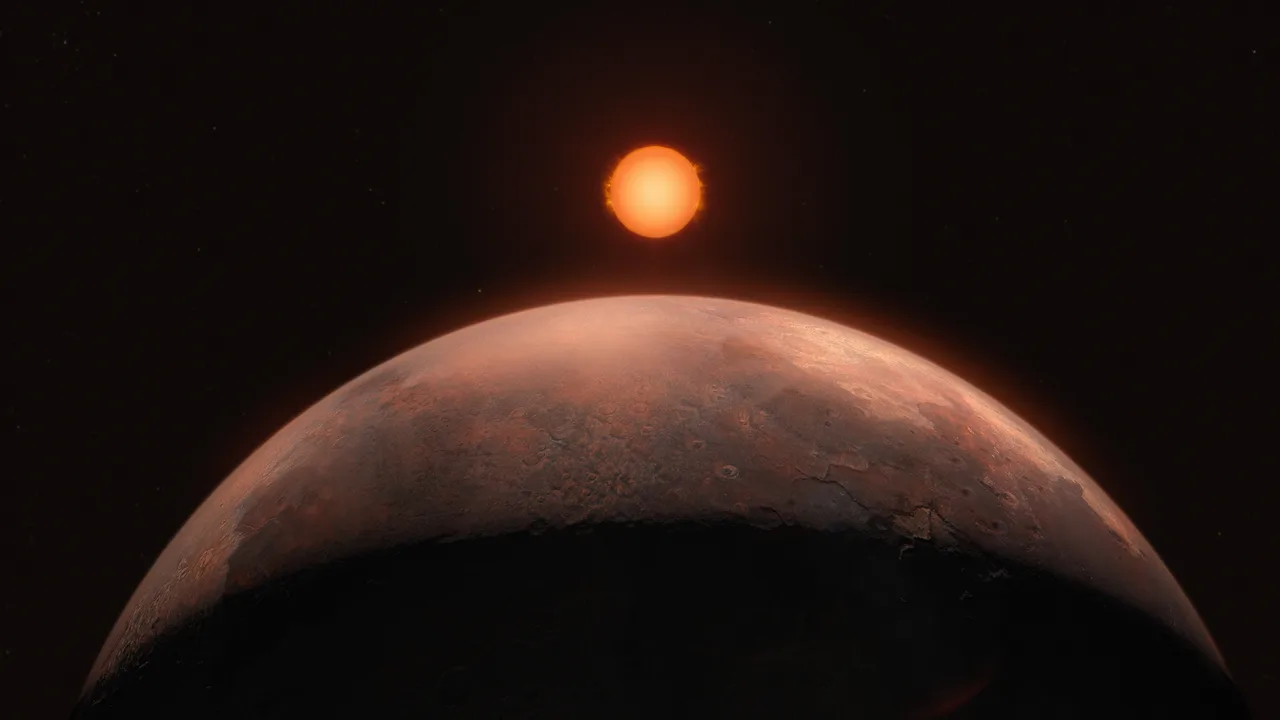 Artist's impression of the planet Barnard's Star b.
(Image credit: ESO/M. Kornmesser; CC BY 4.0)
Barnard's Star is a red dwarf only six light-years away. After the Alpha Centauri system, it is the star closest to the Sun. In October 2024, a team using the ESPRESSO spectrograph of the Very Large Telescope detected a planet here that is considerably lighter than Earth and orbits its star in just 3.15 days.
A little later, in March 2025, measurements with the spectrograph MAROON-X at the Gemini North telescope confirmed this planet and found three more. All four planets were discovered with the radial velocity method. They have only about 20 to 30 percent of Earth's mass and orbit their star so closely that they are unsuitable for life.
Sources: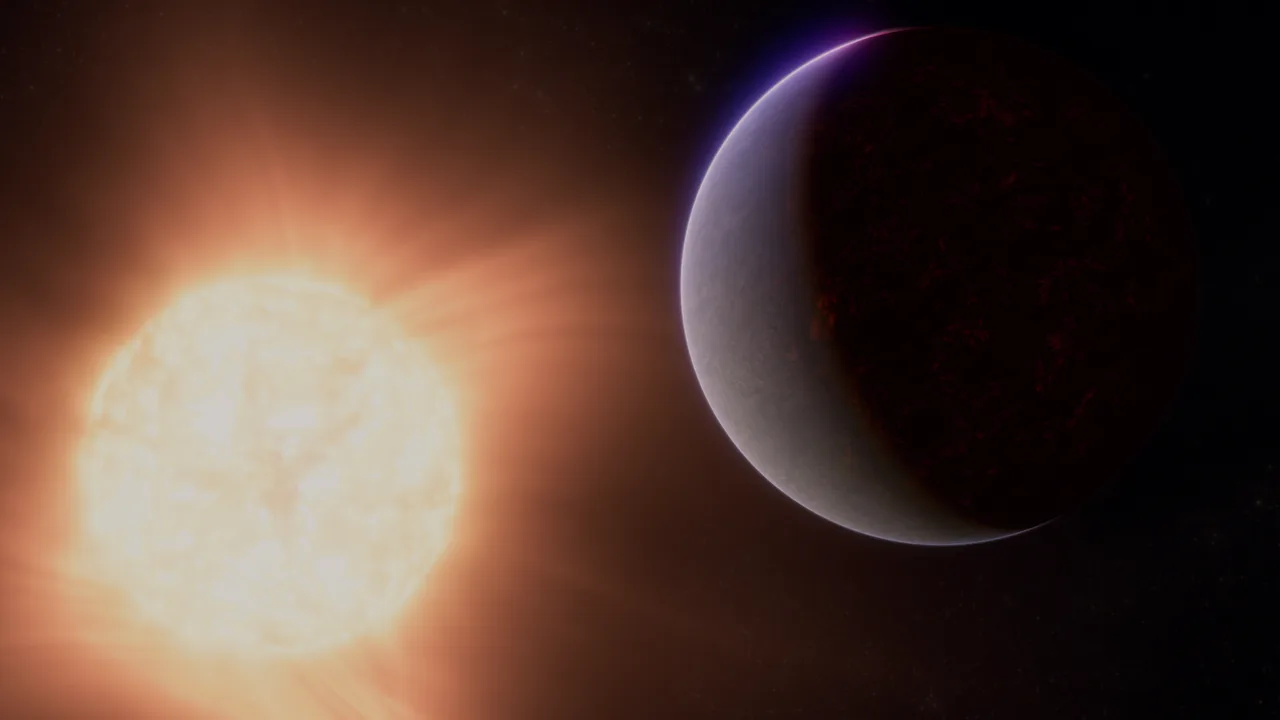 Artist's impression of the super-Earth 55 Cancri e.
(Image credit: NASA, ESA, CSA, R. Crawford (STScI); CC BY 4.0)
Observations with the James Webb Space Telescope provide the best evidence so far for an atmosphere around a rocky planet outside the Solar System. The super-Earth 55 Cancri e is about twice the size of Earth and orbits its star, 41 light-years away, so closely that its surface is probably covered by an ocean of magma. The measurements point to an atmosphere that is rich in carbon dioxide or carbon monoxide and could be continuously replenished from the magma.
Source: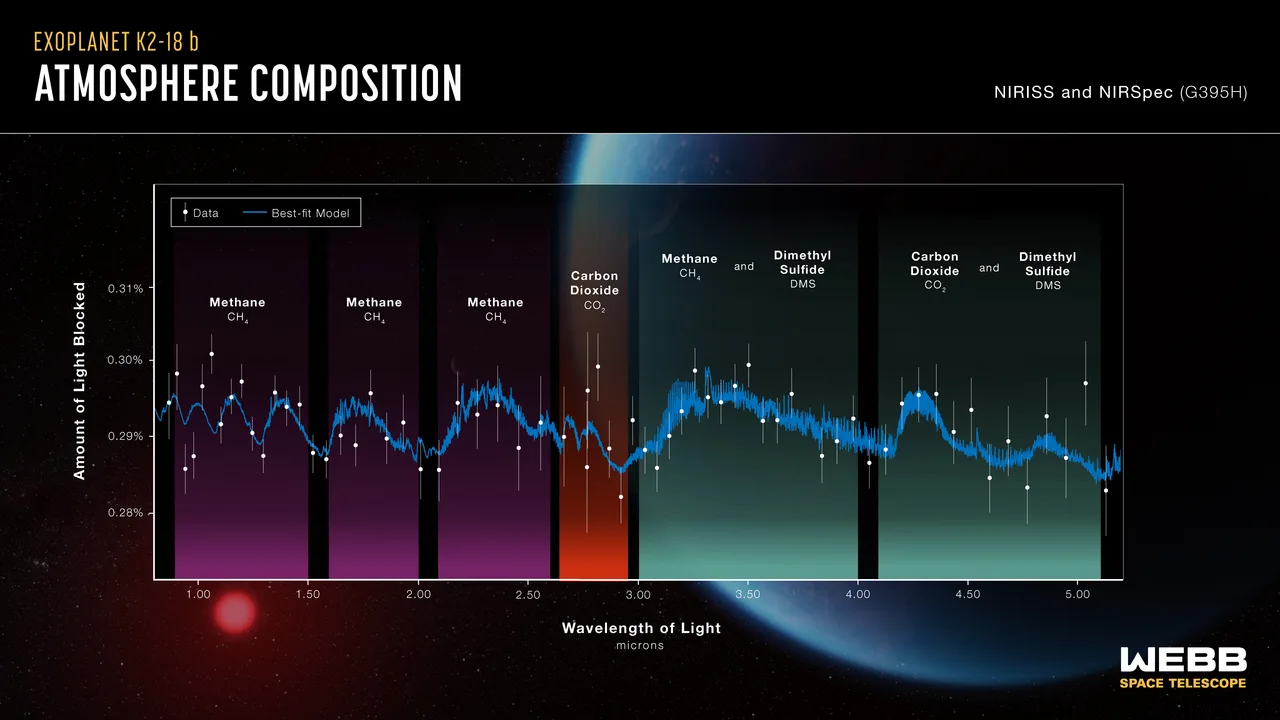 Spectrum of the atmosphere of K2-18 b, taken with the NIRISS and NIRSpec instruments of the James Webb Space Telescope.
(Image credit: NASA, CSA, ESA, J. Olmstead (STScI), N. Madhusudhan (Cambridge University); CC BY 4.0)
K2-18 b is 8.6 times as massive as Earth and orbits a red dwarf 120 light-years away within its habitable zone. The James Webb Space Telescope has detected methane and carbon dioxide in its atmosphere. The researchers therefore consider it possible that K2-18 b is a so-called "Hycean planet" with a hydrogen-rich atmosphere and a global ocean. In addition, they found a weak signal that could originate from dimethyl sulfide, a molecule that on Earth is produced almost exclusively by living organisms.
In April 2025, the same team again reported hints of dimethyl sulfide based on further Webb data. Independent analyses, however, found no robust evidence for it. As things stand today, the signal is not an indication of life.
Source: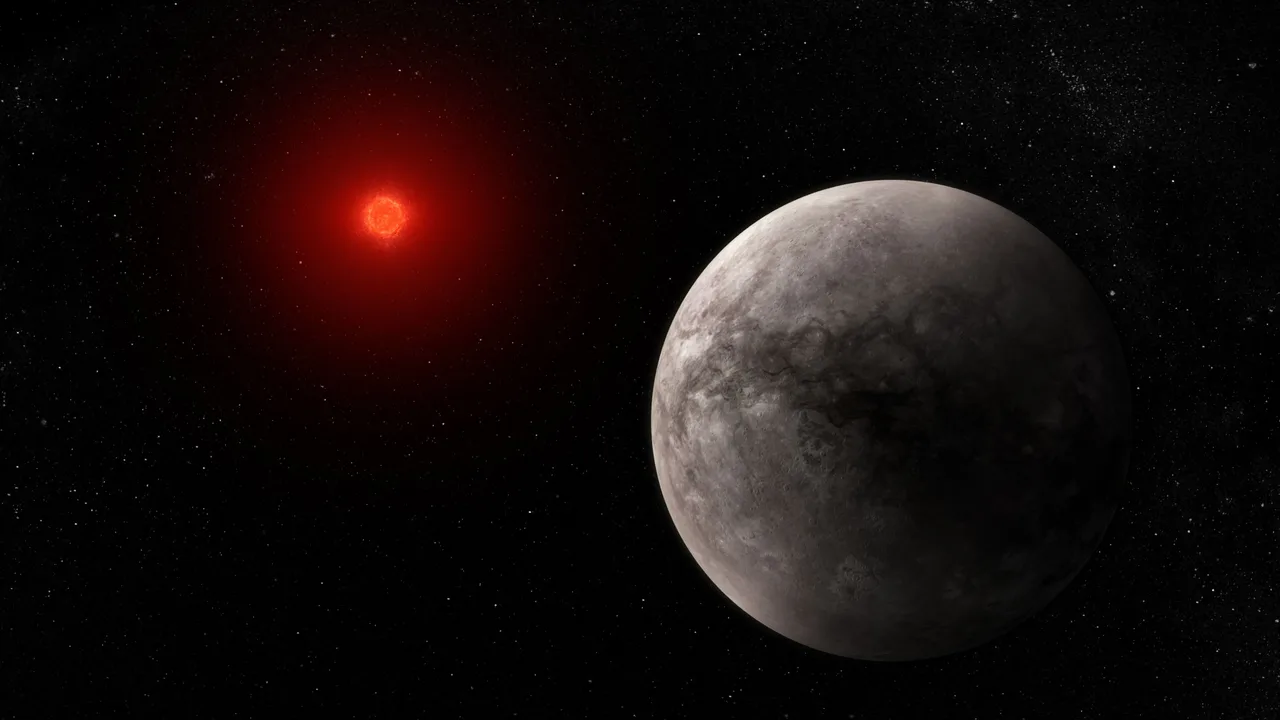 Artist's impression of TRAPPIST-1 b.
(Image credit: NASA, ESA, CSA, J. Olmsted (STScI), T. P. Greene (NASA Ames), T. Bell (BAERI), E. Ducrot (CEA), P. Lagage (CEA); CC BY 4.0)
The planetary system TRAPPIST-1, 40 light-years away, consists of seven rocky planets roughly the size of Earth, three of which lie in the habitable zone. The MIRI instrument of the James Webb Space Telescope was used to measure the thermal emission of the innermost planet, TRAPPIST-1 b, as it disappeared behind its star. Its dayside has a temperature of about 500 K. This fits best with a planet without any significant atmosphere that could transport heat from the dayside to the nightside.
Source: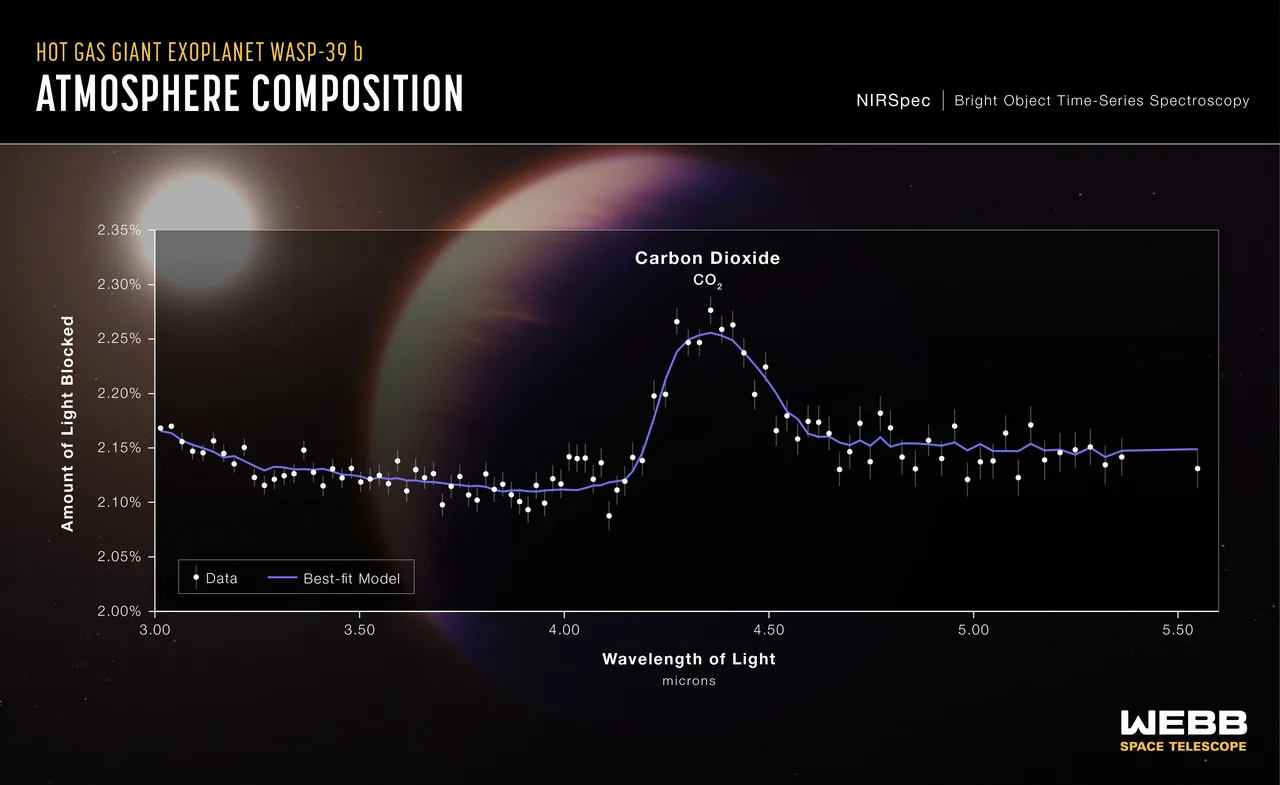 Transmission spectrum of the gas giant WASP-39 b, taken with the NIRSpec spectrograph of the James Webb Space Telescope.
(Image credit: NASA, ESA, CSA, and L. Hustak (STScI). Science: The JWST Transiting Exoplanet Community Early Release Science Team; CC BY 4.0)
Shortly after the start of its science operations, the James Webb Space Telescope unambiguously detected carbon dioxide in the atmosphere of the "hot Saturn" WASP-39 b, about 700 light-years away. What was measured is the starlight that passes through the planet's atmosphere during a transit. The bump at 4.3 microns in the spectrum shows the absorption by carbon dioxide. Later measurements also found sulfur dioxide in the atmosphere of WASP-39 b, which is produced by photochemistry, that is, by the action of starlight.
Source: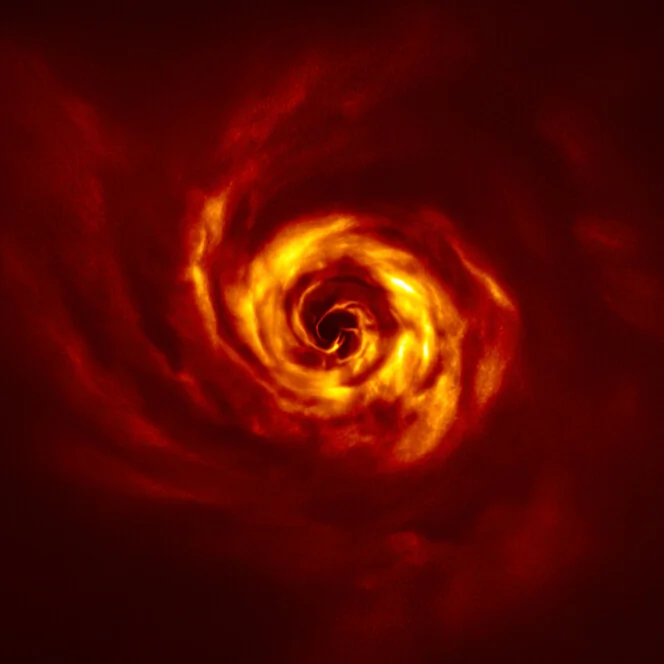 Image of the protoplanetary disk around AB Aurigae taken with SPHERE. (Image credit: ESO/Boccaletti et al.; CC BY 4.0)
Through direct imaging with the Subaru telescope and the Hubble Space Telescope, researchers have discovered the youngest exoplanet known to date in the protoplanetary disk of the star system AB Aurigae. The protoplanet, which is still forming, orbits its star at a distance of 93 AU and could grow into a gas giant with nine times the mass of Jupiter.
The large distance from the star could indicate that planet formation here follows the gravitational instability model. In this model, the planetary disk first becomes unstable in its outer region, which shows itself in the formation of spiral arms. Parts of the disk then collapse under their own gravity and directly form gas giants.
Sources:Confirming exoplanet candidates is a time-consuming process in which the measurements of different detection methods are compared with each other in order to rule out false detections as far as possible. NASA researchers have now succeeded in confirming 301 new exoplanets in one go in the data of the Kepler space telescope, using a neural network called "ExoMiner".
Source: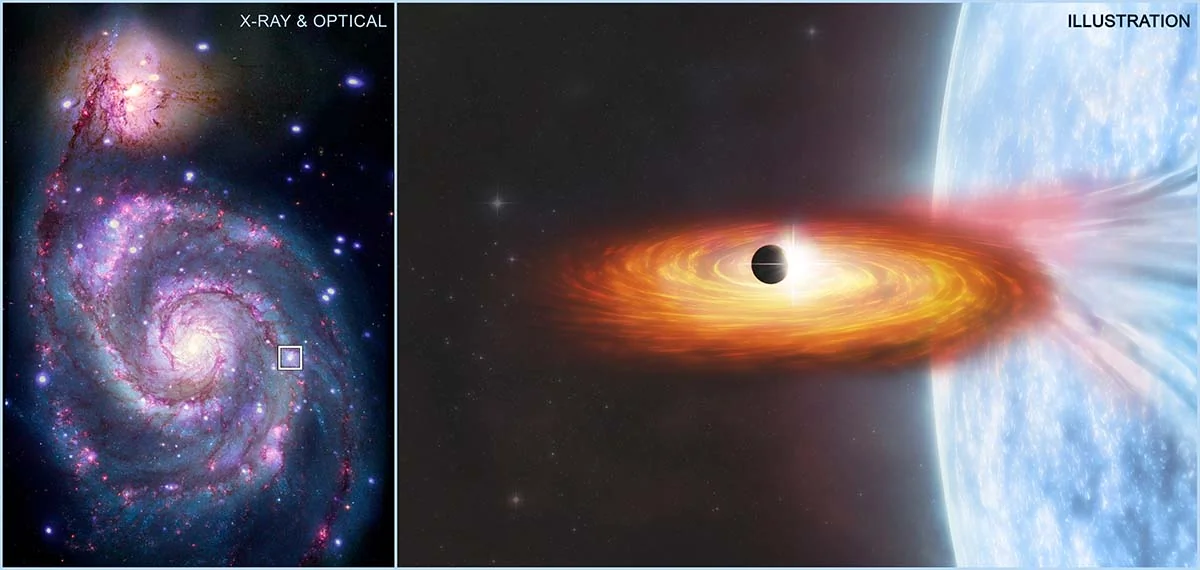 Position of the exoplanet candidate and artist's impression of the binary system. (Image credit: X-ray: NASA/CXC/SAO/R. DiStefano, et al.; Optical: NASA/ESA/STScI/Grendler; Illustration: NASA/CXC/M.Weiss)
By analyzing data from the Chandra X-ray Observatory, NASA researchers have found a first exoplanet candidate in another galaxy. The candidate was discovered while searching for transit events in X-rays. It is located in the Whirlpool Galaxy and orbits a binary system (M51-ULS-1) in which a neutron star (or a black hole) pulls gas from its companion star and makes it glow in X-rays in a small accretion disk.
At present, however, it cannot be ruled out that the object is a red or brown dwarf. Nevertheless, detecting transit events in X-rays appears to be suitable in principle for discovering extragalactic exoplanets.
Source: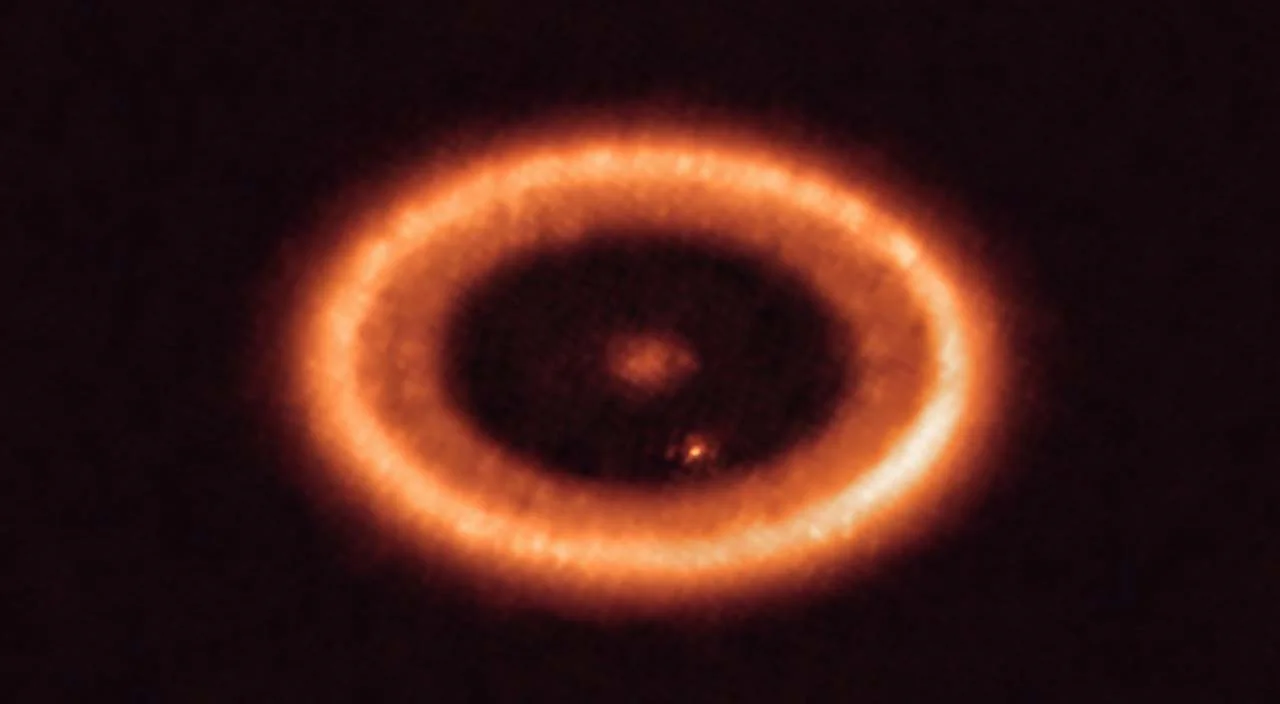 Circumstellar disk around the star PDS 70 with a smaller circumplanetary disk around one of the system's exoplanets.
(Image credit: ALMA (ESO/NAOJ/NRAO)/Benisty et al.)
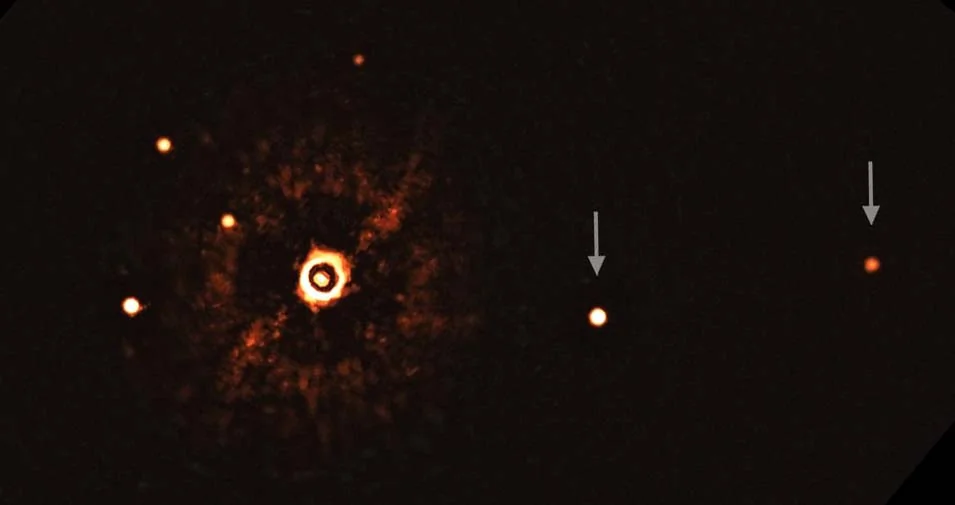 Multi-planet system around the Sun-like star TYC 8998-760-1. (Image credit: ESO/Bohn et al.; 2020-07-22)
An image taken with the Atacama Large Millimeter/submillimeter Array (ALMA) shows the forming planetary system around the star PDS 70, almost 400 light-years away. It shows the circumstellar disk around the star with regions that have already been cleared of gas and dust by planets. Also visible is a circumplanetary disk around one of the system's exoplanets (small bright dot below the center of the image). Exomoons could form in this disk.
Source:On the right you can see the first direct image of an exoplanet system with several planets orbiting a Sun-like star. It consists of two gas giants, which are marked with arrows. They orbit the star TYC 8998-760-1 of spectral class K3 IV, about 310 light-years away. With a surface temperature of 4500 kelvin, the star is somewhat cooler than the Sun and still very young (16.7 million years). The planetary system was imaged by the SPHERE instrument of the European Southern Observatory. The other points of light are background stars.

Visit the miraculous world of pre cambrian life forms. The Ediacara biota is a group of mostly soft-bodied organisms that lived during the Ediacaran period 635-538 million years ago.

Where is the second Earth? About the methods and the current state of exoplanet discovery.
How "Terra-X" a documentary format by german public service broadcaster ZDF failed at flat earth debunking.

Of Moon and Mars civilizations. About the historical beginnings of the search for life in space.