Visit the miraculous world of pre cambrian life forms. The Ediacara biota is a group of mostly soft-bodied organisms that lived during the Ediacaran period 635-538 million years ago.

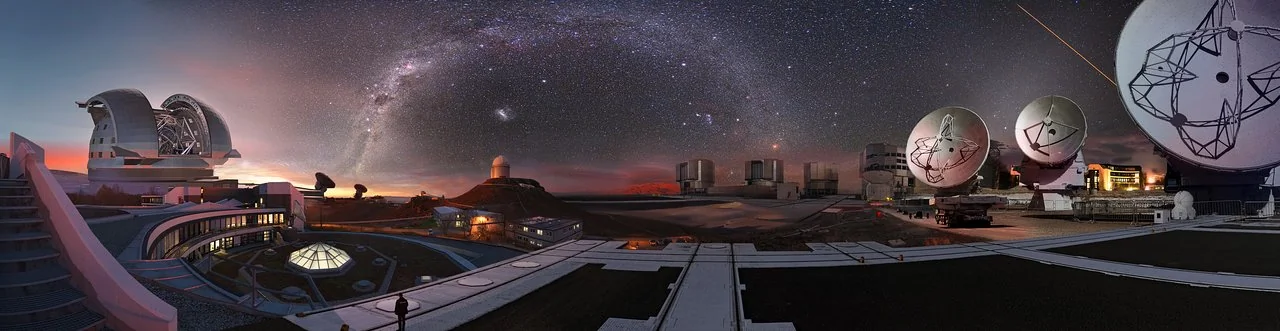 Telescopes and headquarters of the European Southern Observatory. (Image credit: ESO/M. Kornmesser)
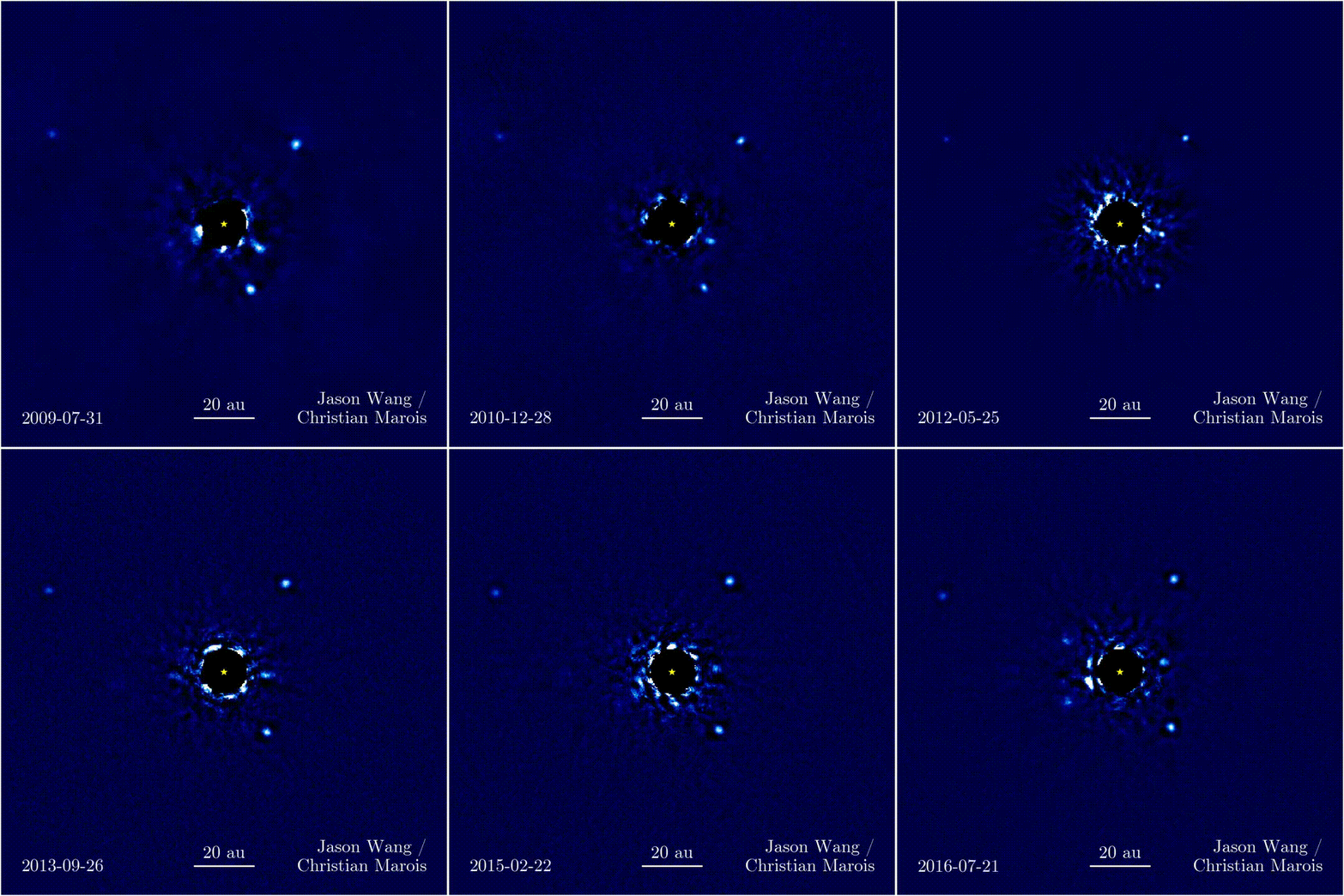 The planetary system HR 8799, imaged over a period of seven years with the Keck Observatory. (CC BY 3.0; Credits: Video making & motion interpolation: Jason Wang Data analysis: Christian Marois Orbit determination: Quinn Konopacky Data Taking: Bruce Macintosh, Travis Barman, Ben Zuckerman)
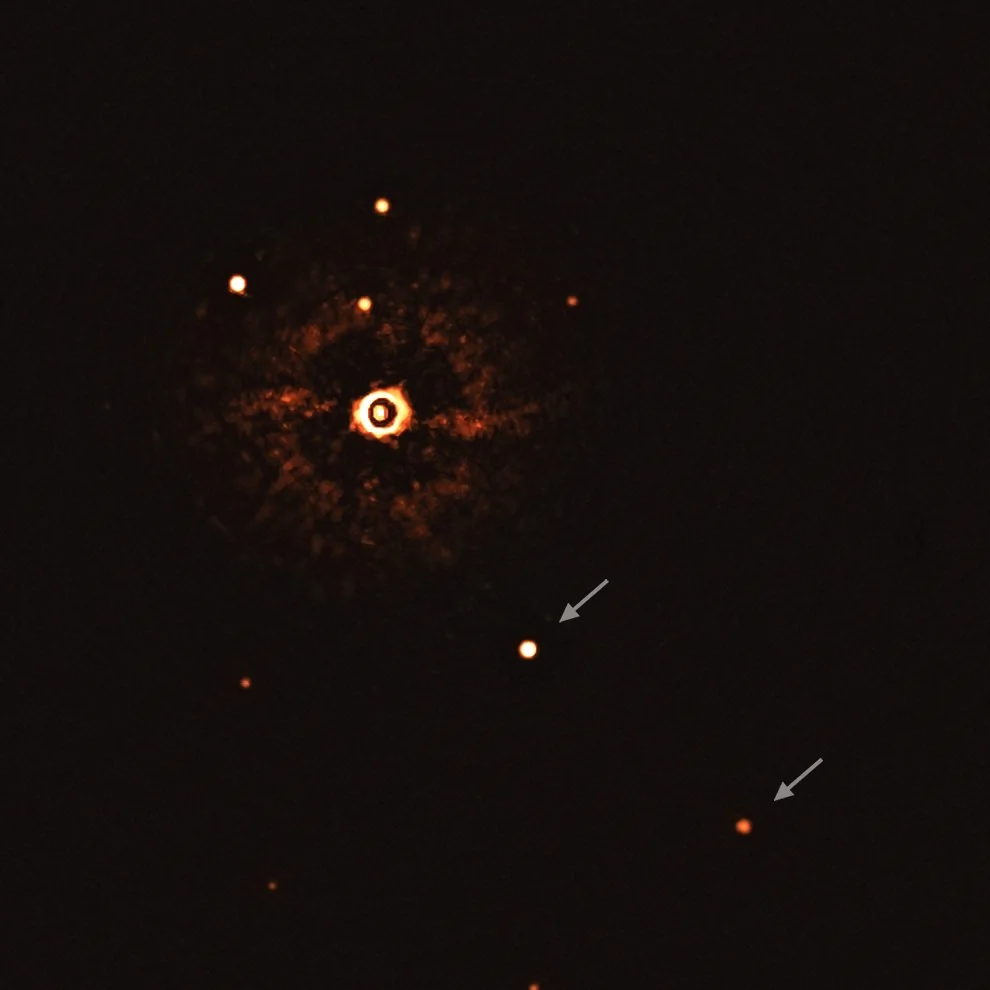 The first direct image of an exoplanet system with more than one planet orbiting a Sun-like star.
It consists of two gas giants, which are marked with arrows. They orbit the star
TYC 8998-760-1, about 310 light-years away.
The planetary system was imaged by the SPHERE instrument of the European Southern Observatory.
The other points of light are background stars.
(ESO/Bohn et al.; 2020-07-22)
One of the most obvious, most interesting but also most difficult methods of discovering exoplanets is to observe them directly. If the light of an exoplanet can be separated from that of its host star, it is not only possible to determine its orbit, but also to draw conclusions about its atmosphere.
This method has only become feasible with modern space telescopes (NASA/ESA Hubble Space Telescope) and large ground-based telescopes (e.g. ESO / VLT). The current technical capabilities are still very limited, however. It is conceivable, though, that a future generation of large telescopes could also identify coarse details on the surface of a planet itself. In the not too distant future it might, for example, be possible to directly detect regionally limited volcanism on exoplanets by means of infrared radiation.
The fundamental problem is that exoplanets do not shine by themselves but only reflect the light of their star. Compared to stars, planets are extremely faint celestial bodies. It is therefore very difficult to separate their light from that of the host star.
Observation is easier if the exoplanet is particularly bright or the star is particularly faint. The visibility of planets can also be increased by the presence of a dense ring system (e.g. Fomalhaut b).
Because exoplanets farther away from their star receive less of its light, they are too dark to be observed in the visible spectrum. The infrared radiation (heat) they emit can be detected, however. This applies, for example, to planets in the early stages of their development.
The NASA Exoplanet Archive currently (as of November 2026) lists 99 exoplanets that were discovered by direct imaging. Almost all of them are less than 600 light-years away from Earth, about half of them less than 300 light-years. The most distant ones are about 750 light-years away.
Summary: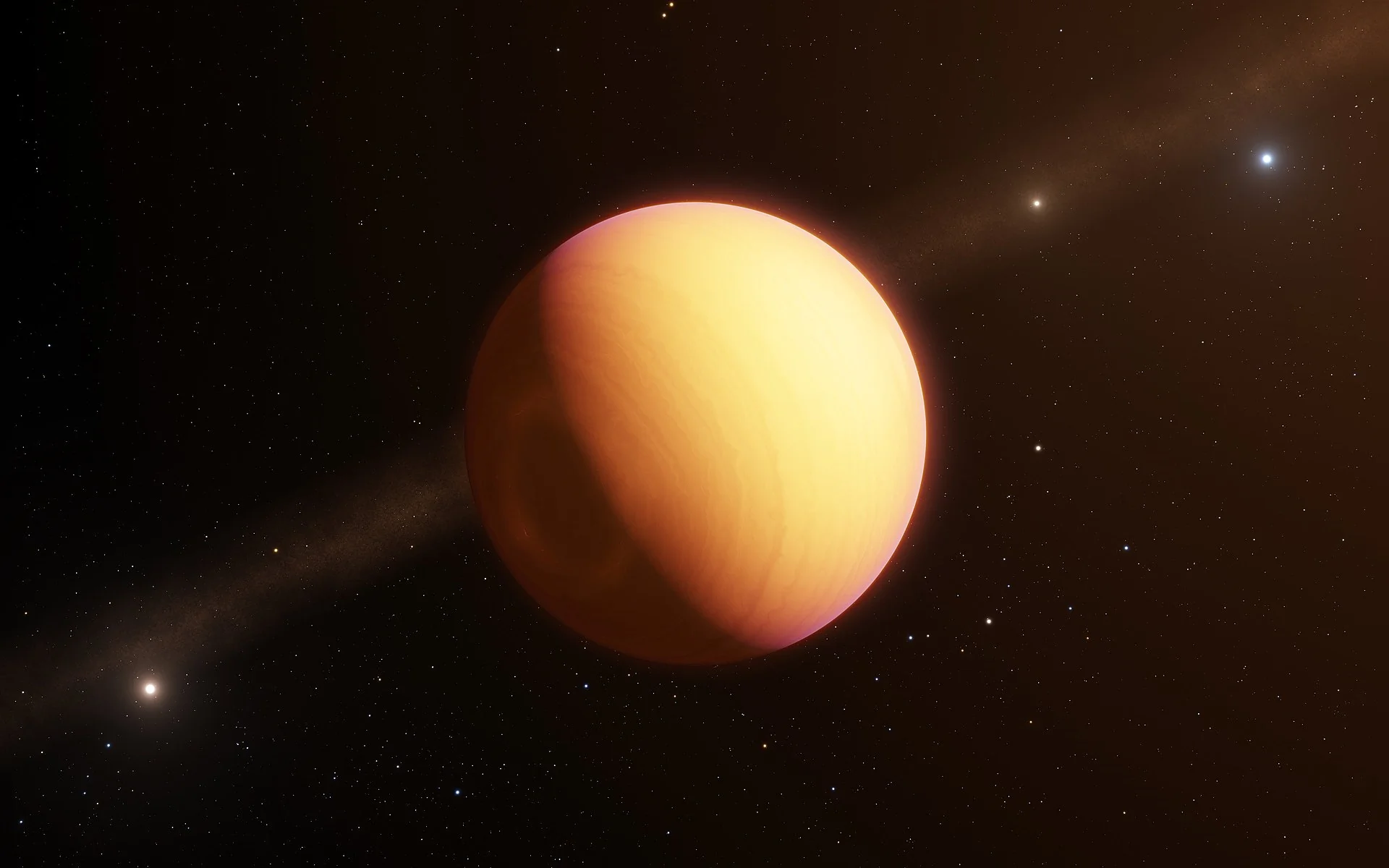 Artist's impression of the exoplanet HR 8799e. Source: ESO/L. Calçada - https://www.eso.org/public/images/eso1905a/
Direct imaging also allows conclusions to be drawn about the atmosphere of exoplanets. In March 2019, researchers of the European Southern Observatory presented the results of observing the exoplanet HR 8799e by means of optical interferometry. The data were obtained with the Very Large Telescope Interferometer (VLTI). It was the first direct observation of an exoplanet using optical interferometry. The team succeeded in recording a spectrum of the planet's light that was 10 times more detailed than in previous studies.
The results confirm that HR 8799e is a young, hot gas giant that is still giving off large amounts of the heat it gained during its formation through the gravitational accumulation of matter [1]. The analysis of the spectrum further showed that the planet's atmosphere must contain clouds of iron and silicates. The atmosphere contains more carbon monoxide than methane, which was unexpected. The researchers explain this with very high vertical wind speeds in the atmosphere, which prevent the carbon monoxide from combining with the hydrogen of the atmosphere to form methane. [2]

Visit the miraculous world of pre cambrian life forms. The Ediacara biota is a group of mostly soft-bodied organisms that lived during the Ediacaran period 635-538 million years ago.

Where is the second Earth? About the methods and the current state of exoplanet discovery.
The story of the first 3.5 billion years of life on Earth. From chemical evolution through prokaryotes and photosynthesis to the first multicellular life forms.
How "Terra-X" a documentary format by german public service broadcaster ZDF failed at flat earth debunking.